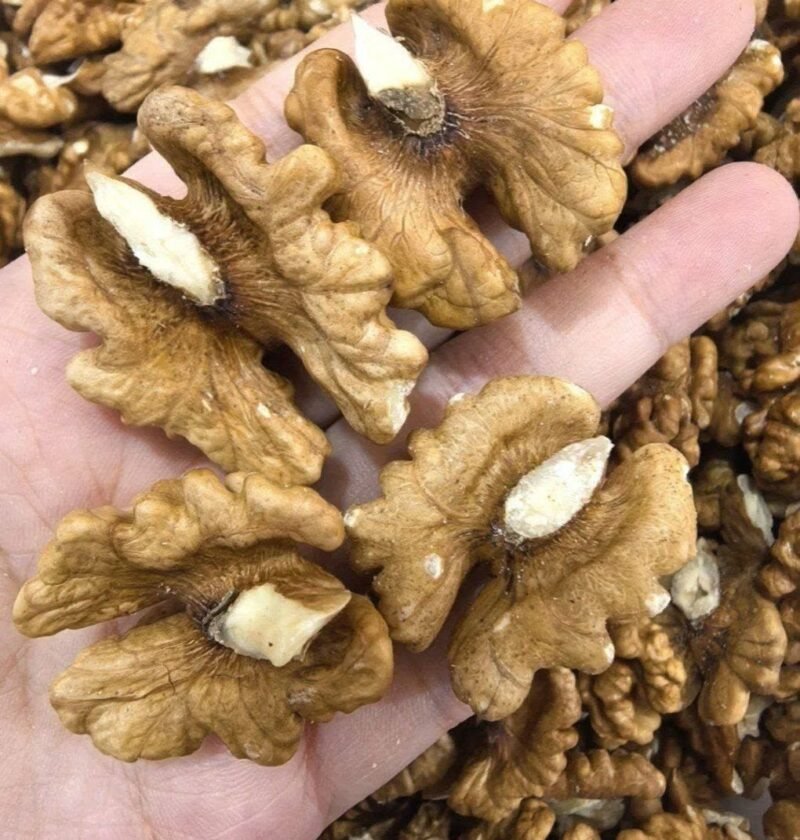
🌰 Doctors Reveal What Eating Walnuts May Do
Walnuts aren’t a miracle food, but they can be a nutritious addition to a balanced diet. They’re rich in unsaturated fats, plant protein, fiber, magnesium, copper, and other nutrients.
Potential benefits of regularly eating walnuts include:
Heart health: Replacing saturated fats with unsaturated fats from foods such as walnuts can support healthier cholesterol levels.
Better overall diet quality: Their combination of healthy fats, protein, and fiber can make meals and snacks more satisfying.
Blood-vessel health: Research suggests that nuts can be part of a heart-healthy eating pattern.
Digestive health: Their fiber contributes to normal bowel function.
Brain health: Walnuts contain nutrients important for normal nervous-system function, although claims that they dramatically “boost memory” or prevent dementia go beyond the evidence.
How much?
A practical serving is about 1 ounce (28 g), roughly a small handful. Walnuts are calorie-dense, so larger amounts can add substantial calories.
Choose unsalted walnuts when possible, particularly if you’re trying to limit sodium.
⚠️ A few cautions
People with a tree-nut allergy should avoid walnuts. And if you’re following a medically prescribed diet, such as one requiring potassium or calorie restriction, your clinician or dietitian can advise on appropriate portions.
Bottom line: Eating walnuts regularly can be part of a heart-healthy diet, but no single food prevents disease or produces miraculous effects.