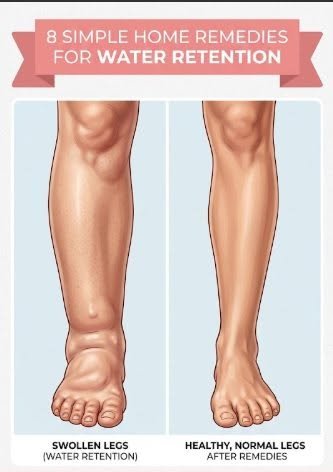
Water retention (mild edema) occurs when excess fluid builds up inside the body’s tissues, often leading to puffiness in the face, hands, abdomen, legs, or feet.
Here are **8 effective, science-backed home remedies and lifestyle habits** to help reduce water retention naturally:
—
### 1. Increase Your Potassium Intake
Potassium is a vital mineral that plays a key role in maintaining fluid balance. It works by **counteracting the effects of sodium**—reducing sodium levels and increasing urine production to help flush out excess water.
* **Top Sources:** Bananas, avocados, sweet potatoes, spinach, salmon, and white beans.
### 2. Cut Back on Sodium (Salt)
A high-sodium diet is one of the leading causes of water retention. Sodium binds to water in the body and helps maintain extracellular fluid balance. When you consume too much salt (especially from processed and restaurant foods), your body holds onto extra water to keep that balance stable.
* **Tip:** Flavor your meals with herbs, spices, and citrus instead of reaching for the salt shaker.
### 3. Drink More Water, Not Less
It sounds counterintuitive, but **drinking more water can actually help you stop retaining it**. When your body is chronically dehydrated, it panics and hoards whatever fluid it has left, leading to swelling. Staying well-hydrated helps your kidneys efficiently flush out excess sodium and waste.
### 4. Get Moving and Exercise Regularly
Physical activity is one of the fastest ways to mobilize trapped fluids. Muscle contractions—especially in your lower legs—act like a pump, pushing accumulated blood and lymphatic fluid back toward your heart and circulatory system.
* **Tip:** A brisk walk, light jogging, or cycling for 30 minutes a day can dramatically improve circulation. Avoid sitting or standing in one position for too long.
### 5. Elevate the Affected Limbs
Gravity is a major factor when it comes to swelling in the lower extremities. If your feet, ankles, or legs are holding fluid, gravity pulls it downward.
* **Tip:** Prop your legs up on pillows so they are **above the level of your heart** for 15 to 30 minutes several times a day. This encourages lymphatic and venous drainage.
### 6. Boost Your Magnesium Intake
Magnesium is an essential electrolyte involved in hundreds of enzymatic reactions in the body. Some studies show that magnesium supplements or magnesium-rich foods can significantly reduce water retention and bloating, particularly symptoms related to premenstrual syndrome (PMS).
* **Top Sources:** Dark leafy greens (spinach, kale), nuts, whole grains, and dark chocolate.
### 7. Try Gentle Compression Garments
If your job or daily routine requires a lot of standing or sitting, fluid can easily pool in your lower legs.
* **Tip:** Wearing **compression socks, stockings, or sleeves** applies continuous, gentle pressure to your limbs, preventing blood and fluid from leaking out of capillaries and accumulating in the tissues.
### 8. Incorporate Natural Diuretics (Like Dandelion Root)
Certain foods and herbal teas act as natural diuretics, meaning they gently signal the kidneys to excrete more water and salt.
* **Top Choices:** Dandelion root tea, green tea, parsley, hibiscus, and cranberry juice.
—
### ⚠️ When to See a Doctor
While lifestyle remedies work well for mild, occasional bloating or swelling, **sudden or severe water retention** can be a sign of an underlying medical condition, such as heart, liver, or kidney disease, or blood clots. If you experience rapid weight gain, severe swelling, or shortness of breath, consult a healthcare professional immediately.
Are you experiencing water retention in a specific area (like your legs, hands, or face), or is it overall bloating?