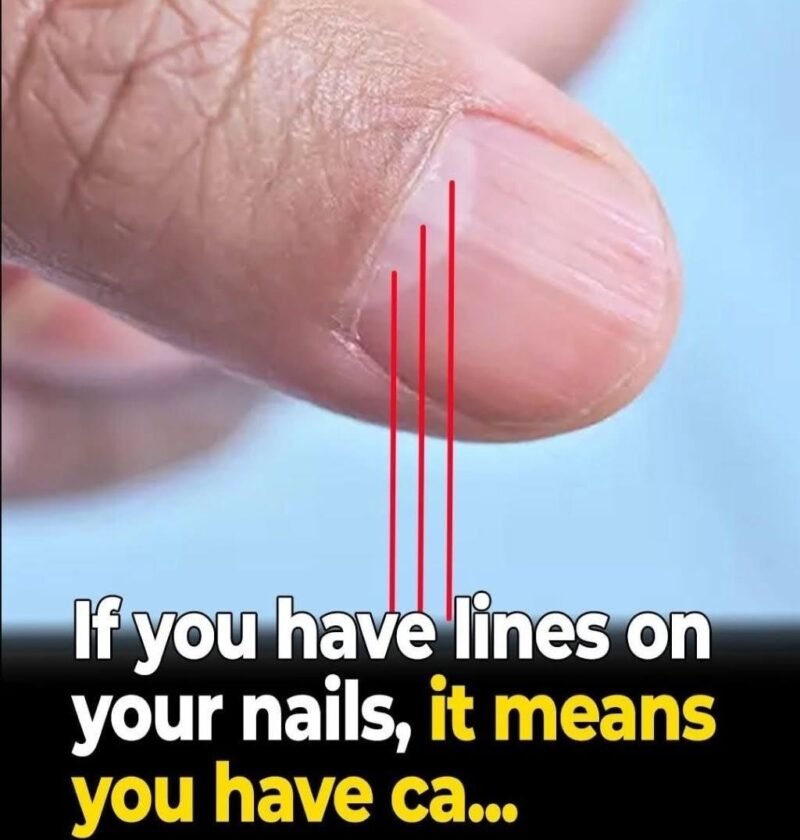
Can your fingernails predict how long you’ll live?
The headline “a telltale sign in your fingernails that may predict your life expectancy” is sensationalized. There is no single fingernail feature that can reliably predict an individual’s lifespan.
However, nails can sometimes provide clues about health conditions, particularly when a change is new or affects multiple nails.
Nail changes worth knowing about
-
A dark streak under one nail: Often harmless pigmentation or trauma, but a new or changing dark band can occasionally be nail melanoma and should be examined.
-
Spoon-shaped nails (koilonychia): Can be associated with iron deficiency, although there are other causes.
-
Yellow, thickened, crumbly nails: Commonly caused by fungal infection, but other conditions can produce similar changes.
-
White nails: Several different conditions can cause whitening; it isn’t automatically a sign of liver disease.
-
Nail clubbing: The nail becomes more curved and the fingertip may enlarge. It can be associated with certain lung, heart, gastrointestinal, or other diseases and deserves medical evaluation.
-
Horizontal grooves (Beau’s lines): Can appear after a significant illness, injury, nutritional problem, or other event that temporarily interrupts nail growth.
What about the “life expectancy” claim?
Some studies have found associations between certain physical characteristics and overall health or mortality in particular populations. An association doesn’t mean the nail change itself predicts how long an individual will live. Age, smoking, cardiovascular health, diabetes, nutrition, physical activity, and many other factors have much stronger relevance to longevity.
When to have a nail checked
See a healthcare professional or dermatologist if you notice a new dark streak, rapidly changing nail color, unexplained clubbing, persistent nail separation, or a significant change affecting several nails.
Bottom line: Your nails can occasionally provide a useful health clue, but they cannot serve as a personal “life-expectancy clock.” A viral post claiming otherwise is overstating what medical evidence can tell us.