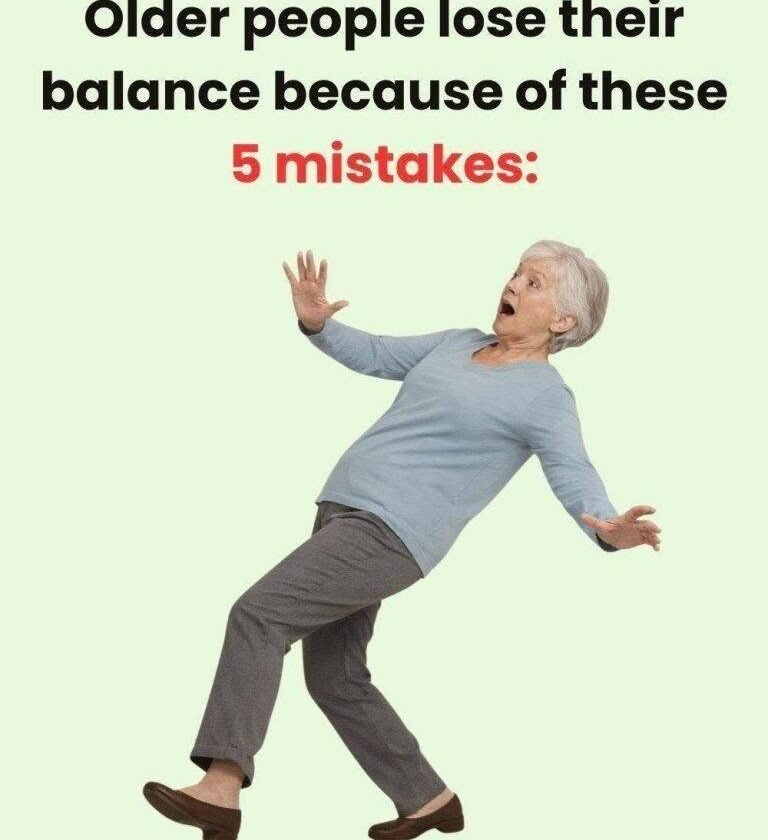
Common Mistakes That Can Affect Balance in Older Adults 🚶
Balance often changes with age, but frequent falls or new unsteadiness shouldn’t simply be dismissed as “getting old.” Many contributing factors can be identified and treated.
1. Staying too inactive
Avoiding movement because of fear of falling can gradually reduce leg strength and balance. Safe walking and strength exercises can help maintain mobility.
2. Wearing unsafe footwear 👟
Loose slippers, worn soles, high heels, or shoes without adequate support can increase the risk of slipping or tripping. Choose well-fitting shoes with secure fastenings and good traction.
3. Getting up too quickly
Standing suddenly from a bed or chair can cause a temporary blood-pressure drop and dizziness. Sit on the edge of the bed for a moment and stand slowly.
4. Ignoring vision problems 👓
Poor vision makes obstacles, steps, and changes in floor height harder to detect. Regular eye examinations are important.
5. Taking medications without reviewing them
Some medications can cause drowsiness, dizziness, or low blood pressure. Have a doctor or pharmacist periodically review your medications, particularly if you’ve recently started a new one.
6. Having a cluttered home
Loose rugs, electrical cords, cluttered walkways, and poor lighting can create avoidable hazards. Keep frequently used pathways clear and ensure stairs and bathrooms are well lit.
7. Not using recommended mobility aids
A cane or walker isn’t a sign of failure. When correctly fitted and used, an appropriate mobility aid can improve safety and confidence.
8. Neglecting muscle strength
Weakness in the legs and core can make it harder to recover from a stumble. Age-appropriate strength and balance exercises are valuable for maintaining independence.
9. Ignoring dizziness or repeated falls
Frequent dizziness, loss of balance, or falls can sometimes be related to inner-ear disorders, neurological conditions, blood-pressure problems, vision changes, or medication effects.
A healthcare professional can help identify the cause rather than simply treating the fall itself.
🚨 Know when it’s an emergency
After a fall, seek urgent medical attention for severe pain, inability to stand or bear weight, loss of consciousness, significant bleeding, or a possible head injury.
Also seek emergency help for sudden loss of balance accompanied by facial drooping, one-sided weakness, speech difficulty, or sudden vision changes, as these can be signs of a stroke.
Bottom line: The best way to protect balance isn’t to move less—it’s to stay safely active, strengthen the legs, improve the home environment, check vision and medications, and investigate new balance problems.