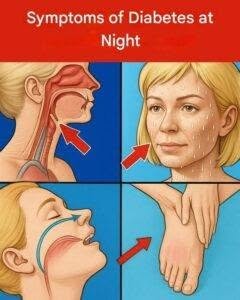
🌙 5 Diabetes Symptoms That Can Appear at Night
Some symptoms can become more noticeable at night when blood glucose is too high or too low. None of these symptoms alone proves that you have diabetes, but recurring patterns are worth discussing with a healthcare professional.
1. Frequent nighttime urination 🚽
High blood glucose can cause the kidneys to remove more glucose and water through urine. If you’re repeatedly waking up to urinate, particularly when this is a new change, it deserves attention.
2. Excessive thirst 💧
Losing more fluid through urination can leave you unusually thirsty, including during the night.
3. Night sweats
Sweating during sleep can occur when blood glucose becomes too low (hypoglycemia), particularly in people taking insulin or certain diabetes medications. Night sweats have many other possible causes, however.
4. Restless or interrupted sleep
High or low blood glucose can contribute to discomfort, thirst, urination, sweating, or headaches that repeatedly disturb sleep.
5. Tingling or burning feet 🦶
Persistent burning, tingling, or numbness in the feet can be a sign of diabetic peripheral neuropathy in people who have diabetes. Symptoms may become more noticeable when you’re resting at night.
🚨 When to get urgent help
If you have diabetes and develop confusion, severe weakness, difficulty staying awake, seizures, vomiting, rapid/deep breathing, or severe dehydration, seek emergency medical care.
If you’re repeatedly experiencing nighttime thirst, urination, sweating, or unexplained weight loss, don’t try to diagnose yourself from symptoms. A healthcare professional can check your blood glucose and/or A1C to determine whether diabetes or another condition is responsible.
Bottom line: Nighttime symptoms can provide clues, but they aren’t a reliable diagnostic test. Persistent symptoms deserve proper testing rather than treatment based on an online checklist.