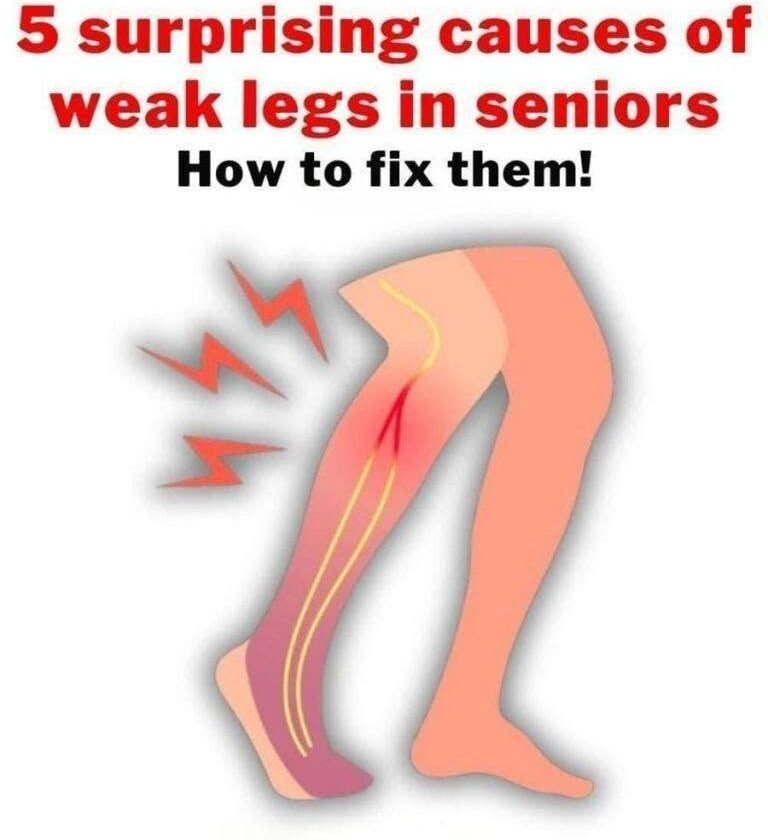
5 Surprising Causes of Weak Legs in Seniors — and What Can Help
Leg weakness is not simply an unavoidable part of aging. It can result from several treatable problems, and finding the underlying cause is more important than simply trying to “strengthen the legs.”
1. Loss of muscle from inactivity
Spending more time sitting or being inactive can gradually reduce muscle strength and endurance.
What can help: A gradual, appropriately supervised strength-training and walking program can rebuild strength and function.
2. Vitamin B12 deficiency or nerve problems
Low vitamin B12 can contribute to peripheral neuropathy, which may cause weakness, numbness, tingling, or balance problems. Diabetes is another major cause of peripheral neuropathy.
What can help: A clinician can check for B12 deficiency, diabetes, thyroid problems, and other causes rather than taking supplements blindly.
3. Medication effects
Some medications can contribute to muscle weakness, cramps, dizziness, or nerve symptoms. Statins, for example, can sometimes cause muscle-related symptoms.
What can help: Ask a doctor or pharmacist to review your medications. Don’t stop a prescribed medicine on your own.
4. Poor circulation in the legs
Peripheral artery disease (PAD) can cause leg weakness, numbness, fatigue, or cramping—often becoming noticeable during walking and improving after rest.
What can help: Treatment may include regular supervised exercise, stopping smoking, and managing blood pressure, cholesterol, and diabetes. A clinician can check circulation with an ankle-brachial pressure test.
5. Nerve or spine problems
Conditions affecting the lower spine or nerves can cause leg weakness, numbness, pain, or difficulty walking. These may include spinal stenosis, sciatica, or peripheral neuropathy.
What can help: The appropriate treatment depends on the cause and may involve physical therapy, medication, or further evaluation.
🚨 When weakness needs urgent attention
Sudden weakness, especially on one side of the body, particularly when accompanied by facial drooping, speech difficulty, vision changes, or loss of balance, can be a sign of a stroke and requires emergency medical attention.
Likewise, rapidly worsening weakness, inability to walk, or weakness accompanied by severe back pain or loss of bladder/bowel control requires urgent assessment