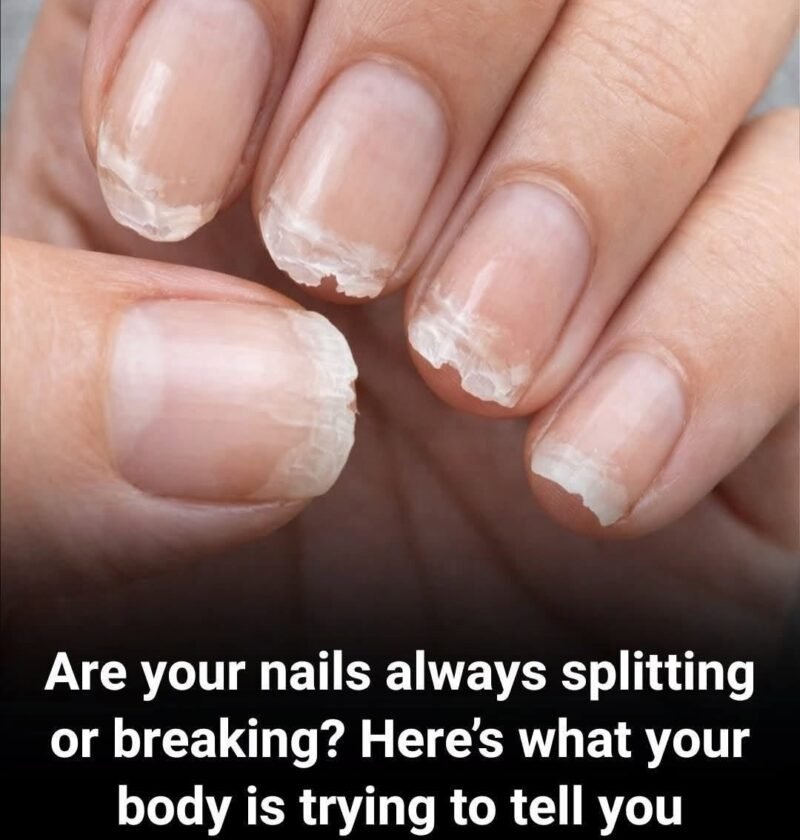
Brittle or Weak Nails May Signal… What?
Brittle, splitting or unusually thin nails can sometimes be a clue to an underlying health problem, but they’re much more often caused by everyday factors such as frequent hand-washing, water exposure, chemicals, nail polish/removers, aging or repeated trauma. (Cleveland Clinic)
Possible medical causes
- Iron deficiency: particularly when nails become thin and spoon-shaped (concave). (Cleveland Clinic)
- Thyroid disorders: both hypothyroidism and hyperthyroidism can affect nail strength and growth. (Cleveland Clinic)
- Nutritional deficiencies: inadequate iron, zinc, protein or certain other nutrients can affect nails. (Cleveland Clinic)
- Fungal infection: more likely if nails are also thickened, yellow or crumbly. (Cleveland Clinic)
- Psoriasis or other skin conditions: can cause changes in nail texture, ridges, pitting or splitting. (Cleveland Clinic)
What you can do
Keep nails relatively short, moisturize your hands and nails regularly, and minimize prolonged exposure to water and harsh cleaning chemicals. Don’t automatically start iron, zinc or biotin supplements—testing for a deficiency is preferable, since excessive supplementation can also cause problems.
See a healthcare professional if nail changes are new, persistent, affecting many nails, or accompanied by fatigue, hair loss, weight changes or other symptoms. A new or changing dark streak under a nail should also be examined by a dermatologist because, although uncommon, it can be melanoma. (American Academy of Dermatology)
Bottom line: Brittle nails don’t automatically mean you’re deficient in a vitamin or have a serious disease. Iron deficiency and thyroid problems are possibilities, but everyday nail damage is much more common.