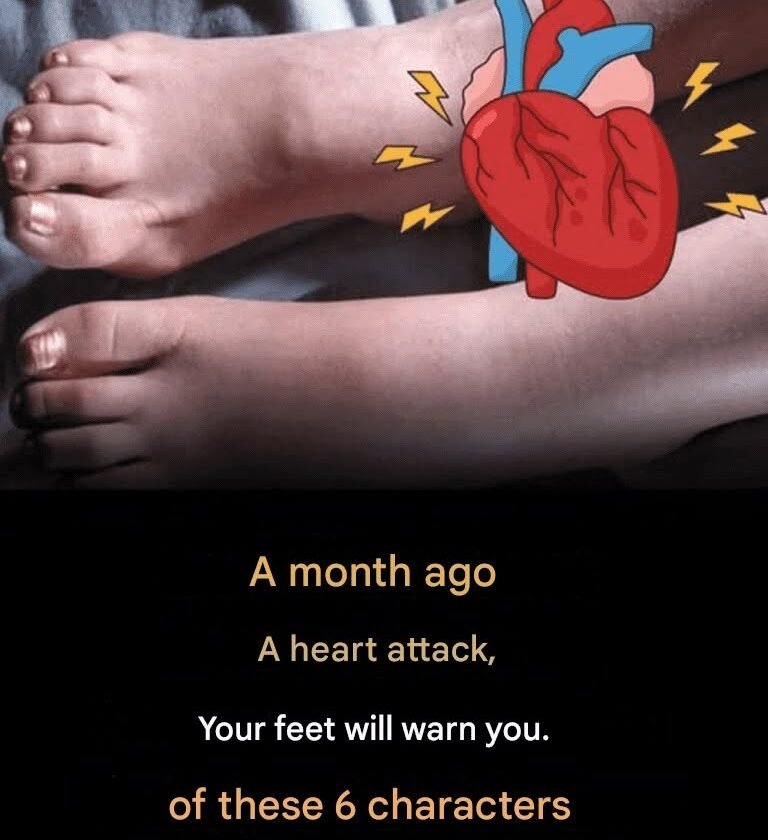
❤️ “A Month Before a Heart Attack, Your Feet Warn You” — What’s Actually True?
Be cautious with this claim. There is no medically established set of six foot symptoms that reliably predicts a heart attack one month in advance. A heart attack can occur without any warning, and the classic warning symptoms usually involve the chest, upper body, breathing, or general symptoms, rather than the feet.
What changes in the feet can mean
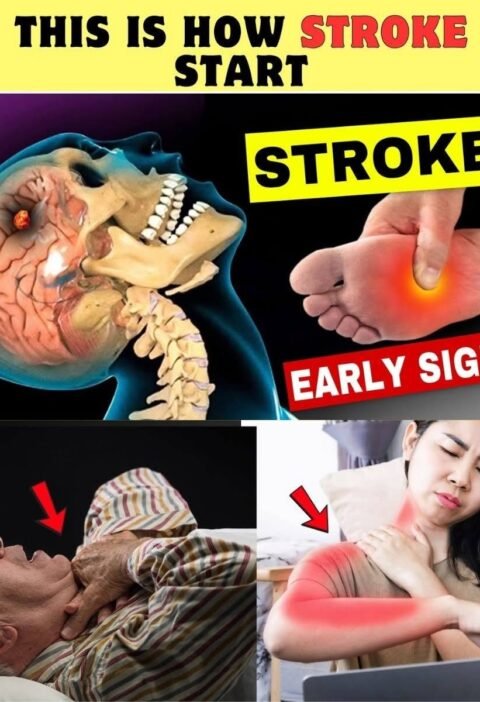
Some foot or leg symptoms can indicate circulation problems, which are associated with cardiovascular disease:
- Swelling in both feet or ankles: Can occur with heart failure, but also with medications, kidney disease, venous problems, and other conditions.
- Cold feet: Sometimes associated with poor arterial circulation, although many other causes are possible.
- Pain or cramping when walking that improves with rest: This can be a symptom of peripheral artery disease (PAD).
- Slow-healing wounds on the feet: May occur when blood flow is impaired, particularly in people with diabetes or PAD.
- Changes in skin color or temperature: Significant changes can indicate reduced circulation.
- Numbness or weakness: Can have many causes and isn’t specifically a heart-attack warning.
These symptoms do not mean a heart attack is about to happen. But persistent circulation symptoms should be evaluated because PAD itself is associated with increased cardiovascular risk.
🚨 Know the real heart-attack warning signs
Seek emergency medical help if you develop pressure, squeezing, fullness, or pain in the center of the chest, particularly if it lasts several minutes or comes and goes, or if you have symptoms such as:
- Shortness of breath
- Cold sweat
- Nausea or vomiting
- Unusual fatigue
- Lightheadedness
- Pain or discomfort spreading to the arm(s), back, neck, jaw, or stomach
Women and older adults can sometimes have less typical symptoms.
Bottom line: Don’t wait for foot symptoms as a supposed “one-month warning.” If your feet or legs are persistently swollen, painful, unusually cold, discolored, or developing wounds, get them assessed—but sudden chest or breathing symptoms require immediate emergency care.