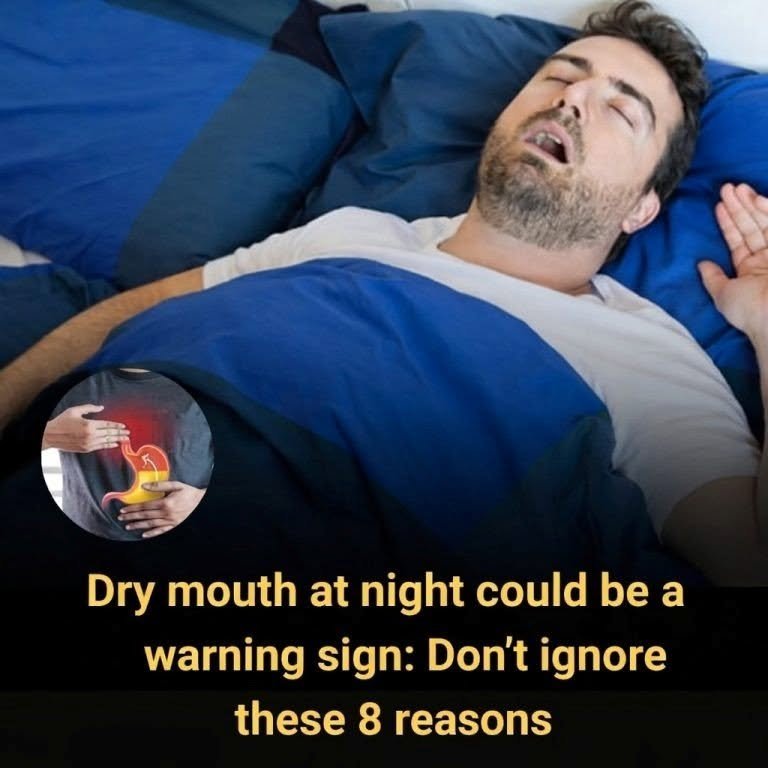
Waking up with a parched mouth every now and then is common, especially if you slept in a dry room or had a stuffy nose. However, chronic nighttime dry mouth (medically known as nocturnal xerostomia) is more than just a minor annoyance—it can be your body’s way of signaling an underlying health issue or a medication side effect.
Saliva plays a crucial role in protecting your teeth, aiding digestion, and keeping oral tissues healthy. Ignoring persistent dryness can lead to rapid tooth decay, oral infections, and disrupted sleep.
Here are 8 warning signs and associated symptoms of nighttime dry mouth that you shouldn’t ignore, along with what they might mean:
1. Thick, Stringy, or Sticky Saliva
-
What it looks like: When you wake up, your saliva doesn’t feel watery or thin; instead, it feels heavy, ropey, viscous, or paste-like.
-
Why it matters: This indicates a sharp drop in your salivary flow rate. Without enough thin fluid to lubricate the mouth, debris and bacteria linger, paving the way for plaque buildup and gum irritation.
2. Chronic Bad Morning Breath (Halitosis)
-
What it looks like: Waking up with a foul taste or a powerful odor in your mouth that doesn’t easily go away, even after a thorough brushing.
-
Why it matters: Saliva acts as the mouth’s natural self-cleaning agent, washing away food particles and dead cells. When saliva dries up at night, bacteria multiply rapidly, producing sulfur compounds that cause persistent bad breath.
3. Cracked Lips and Sores at the Corners of the Mouth
-
What it looks like: Dry, peeling, chapped lips, or painful splits and cracks at the corners of your mouth (a condition called angular cheilitis).
-
Why it matters: Extreme local dehydration and a lack of moisture compromise the skin and mucosal barriers. Cracks at the corners of the mouth can easily become breeding grounds for fungal (yeast) or bacterial infections due to pooled saliva or lack thereof.
4. A Burning Sensation on Your Tongue or Palate
-
What it looks like: A stinging, tender, or scalding feeling on your tongue (sometimes called glossodynia), the roof of your mouth, or your inner cheeks.
-
Why it matters: Oral tissues are delicate. Without a protective coating of saliva, friction increases against your teeth, and the mucosal lining can become inflamed, irritated, or prone to minor ulcerations.
5. Frequent Nighttime Awakenings to Drink Water
-
What it looks like: Finding yourself repeatedly reaching for a glass of water on your nightstand or waking up with an intense, unquenchable thirst.
-
Why it matters: While this can simply mean you are dehydrated or consumed too much salt/caffeine, chronic midnight thirst can be an early metabolic warning sign of undiagnosed diabetes or systemic dehydration.
6. Difficulty Swallowing, Speaking, or Wearing Dentures
-
What it looks like: Struggling to swallow dry foods (like crackers or bread) without washing them down with water, or waking up with your tongue sticking to the roof of your mouth. If you wear dentures, you may notice they suddenly feel loose, cause friction sores, or are difficult to keep in place.
-
Why it matters: Severe lack of lubrication impairs basic mechanical functions of the mouth and heavily impacts your overall comfort and nutrition.
7. A Sudden Spike in Cavities or Gum Inflammation
-
What it looks like: Your dentist tells you that you are developing new cavities at an unusual rate, or your gums look red, swollen, and bleed easily (gingivitis) despite good brushing and flossing habits.
-
Why it matters: Saliva neutralizes plaque acids and delivers minerals like calcium and phosphate back to your tooth enamel. Without this nocturnal defense shield, teeth are highly vulnerable to rapid decay and gum disease.
8. Gasping, Snoring, or Waking Up with a Sore Throat
-
What it looks like: A raw, scratchy throat every morning, coupled with chronic snoring or reports from a partner that you gasp or stop breathing during the night.
-
Why it matters: This is a hallmark sign of mouth breathing during sleep—often driven by nasal congestion, a deviated septum, allergies, or Obstructive Sleep Apnea (OSA). Sleep apnea is a serious medical condition that disrupts breathing and stresses the cardiovascular system.
What Can You Do About It?
-
Address Mouth Breathing: If you sleep with your mouth open due to a stuffy nose, try using saline nasal sprays, nasal strips, or a bedside humidifier to encourage nasal breathing.
-
Review Medications: Over 500 medications (including antihistamines, blood pressure drugs, antidepressants, and diuretics) list dry mouth as a side effect. Never stop taking prescribed drugs on your own, but talk to your doctor or pharmacist if you suspect a medication is the culprit.
-
Adjust Evening Habits: Limit alcohol, caffeine, and salty foods close to bedtime, as they worsen dehydration. Sip water throughout the day rather than chugging a massive amount right before bed.
-
Protect Your Teeth: Use an alcohol-free, fluoride, or moisturizing mouthwash, and maintain rigorous dental hygiene to shield your enamel from the effects of reduced saliva.
When to see a professional: If self-care measures and lifestyle tweaks do not resolve your nighttime dry mouth within a couple of weeks, schedule a visit with your dentist or primary care physician. They can investigate underlying systemic causes (such as autoimmune conditions like Sjögren’s syndrome) or evaluate you for sleep-related breathing disorders.