High cholesterol: the important truth about “5 symptoms”
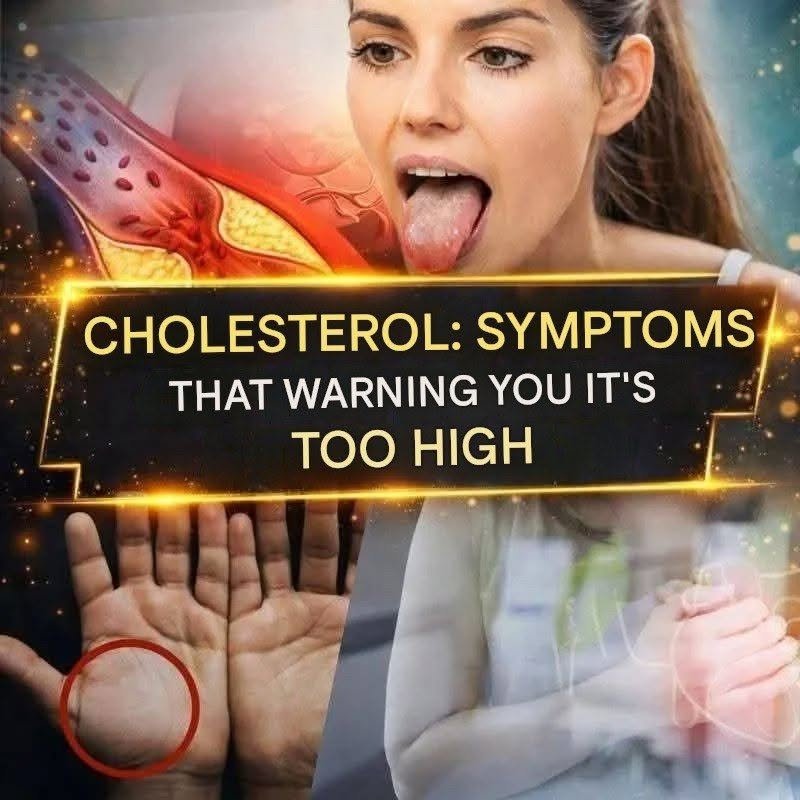
The headline “Cholesterol: 5 symptoms that warn you it’s too high” is misleading. High cholesterol usually causes no symptoms at all. The reliable way to know your cholesterol is high is a blood test (lipid profile).
C
CDC
+1
There are, however, a few physical findings that can occur with very high, often inherited cholesterol, particularly familial hypercholesterolemia:
Yellowish fatty bumps (xanthomas) — especially around the elbows, knees, hands, or tendons.
Yellowish deposits around the eyelids (xanthelasma).
A white, gray, or bluish ring around the cornea (corneal arcus) — particularly concerning when it appears unusually early in life.
Thickened or painful Achilles tendons — cholesterol can accumulate in the tendons in familial hypercholesterolemia.
Early cardiovascular disease — chest pain, heart attack, or other circulation problems can result from cholesterol-driven artery disease, but these are complications of high cholesterol rather than direct “symptoms” of the cholesterol itself.
C
CDC
+2
The biggest takeaway
Don’t wait for symptoms. Most people with high LDL cholesterol feel perfectly normal while cholesterol is contributing to plaque buildup in their arteries.
C
CDC
If an adult has an LDL level above 190 mg/dL (about 4.9 mmol/L), particularly together with a family history of heart attacks at a young age, doctors may investigate familial hypercholesterolemia, which often requires medication in addition to lifestyle measures.
C
CDC
So if the article you’re reading claims that ordinary symptoms such as headaches, dizziness, tiredness, or numbness prove your cholesterol is high, that’s not a reliable way to diagnose it. A lipid blood test is far more informative.
C
Sources