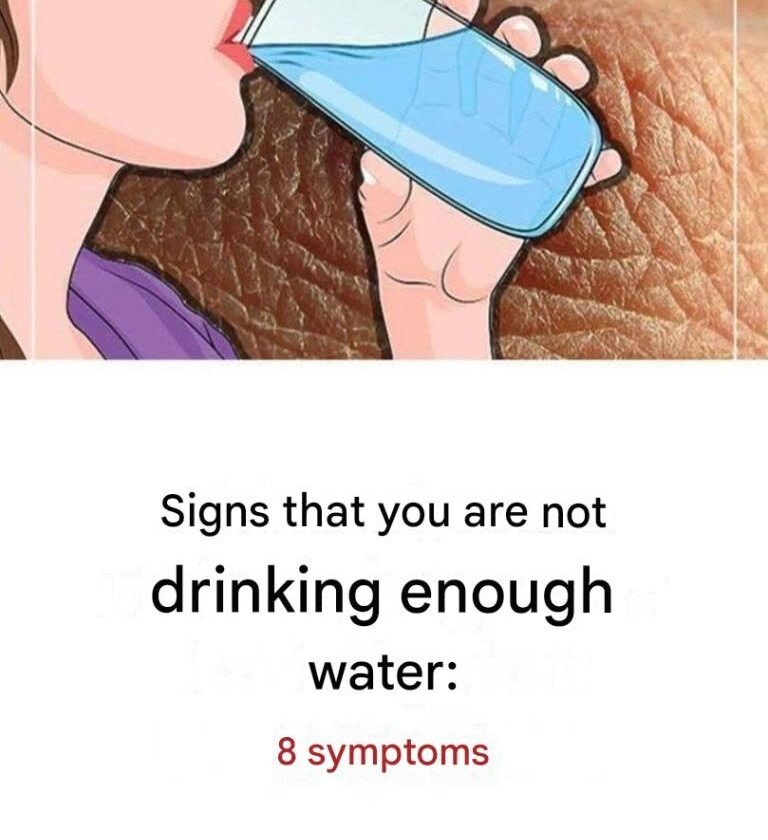
💧 What Happens to Your Body If You Don’t Drink Enough Water?
Your body needs water for nearly every major function. When you lose more fluid than you replace, dehydration develops. Even relatively mild dehydration can affect how you feel and function.
M
Mayo Clinic
+1
Early signs
You may notice:
Thirst and dry mouth
Dark-yellow urine or urinating less often
Headache
Tiredness or weakness
Dizziness or lightheadedness
Difficulty concentrating or feeling mentally “foggy”
M
Mayo Clinic
+1
Thirst isn’t always a reliable warning, particularly in older adults, whose sense of thirst can become less noticeable with age.
M
Mayo Clinic
If dehydration becomes more severe
As fluid loss increases, your blood volume can fall and your electrolytes can become abnormal. Severe dehydration can lead to:
Confusion
Very little or no urine
Fainting
Seizures
Kidney problems
Very low blood pressure and shock
Severe dehydration can be life-threatening and requires urgent medical treatment.
M
Mayo Clinic
+1
🚽 Your kidneys feel it too
Your kidneys need adequate fluid to remove waste and maintain the right balance of water and electrolytes. Repeated or prolonged dehydration can increase the risk of kidney stones and urinary problems and, in severe cases, contribute to kidney failure.
M
Mayo Clinic
How much water do you actually need?
There’s no universal number such as “exactly eight glasses.” Fluid requirements vary with age, body size, activity, climate, diet, illness, and medications. Water also comes from foods and beverages other than plain water.
M
Mayo Clinic
For many healthy people, light-yellow urine and rarely feeling thirsty are useful practical signs that they’re getting enough fluid.
M
Mayo Clinic
Don’t deliberately force huge amounts of water, either. Excessive water intake can dilute blood sodium and cause hyponatremia, which can be dangerous.
M
Mayo Clinic
⚠️ Older adults need particular attention
Older adults are at increased risk because they may have a reduced sense of thirst, less fluid reserve, difficulty accessing drinks, or take medicines such as diuretics that increase fluid loss.
M
Mayo Clinic
If you have heart failure, kidney disease, or another condition requiring fluid restriction, don’t simply increase your water intake without asking your healthcare professional.
Bottom line: Don’t wait until you’re extremely thirsty. Drink regularly throughout the day, increase fluids when you’re sweating or ill, and pay attention to urine color and how you’re feeling. Persistent dizziness, confusion, inability to keep fluids down, or very little/no urination warrants medical attention.
M
Mayo Clinic
+1
M
Sources