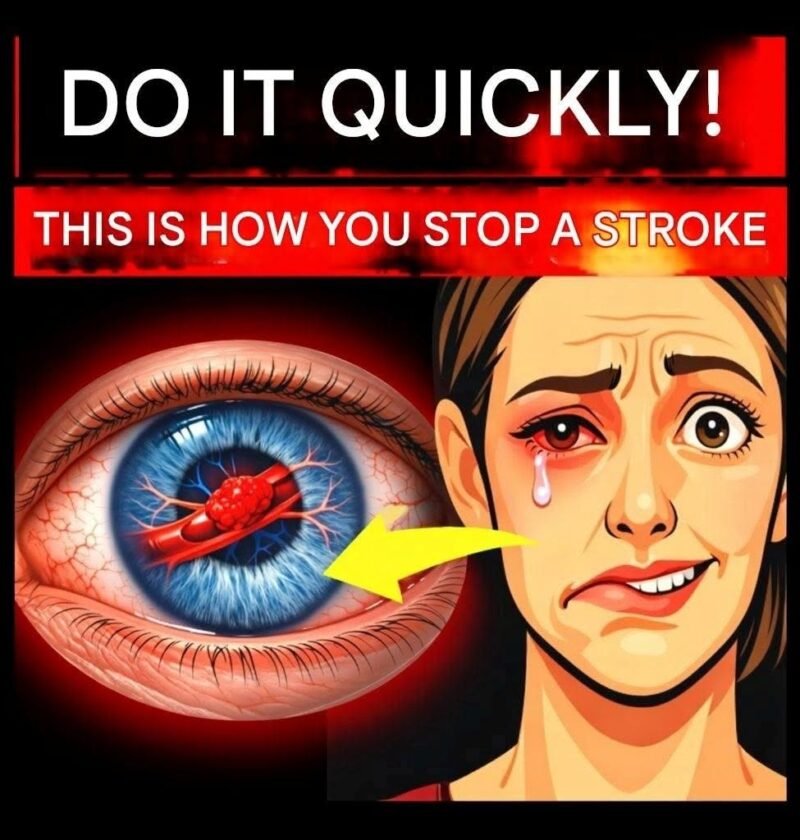
Stroke: How to Save Your Brain in 4 Hours” — What You Need to Know
The 4-hour window is based on some medical treatments for certain ischemic strokes, but the most important message is: don’t wait four hours. Call emergency services immediately at the first sign of a stroke. Every minute matters.
🚨 Recognize B.E. F.A.S.T.
- B — Balance: sudden loss of balance or coordination
- E — Eyes: sudden vision changes
- F — Face: one side drooping or numb
- A — Arm: sudden weakness or numbness, especially on one side
- S — Speech: slurred speech, confusion, or difficulty understanding
- T — Time: call emergency services immediately
A sudden severe headache with no known cause can also be a stroke warning sign.
⏱️ Why “4 hours” appears in these headlines
For eligible patients with an ischemic stroke, clot-busting medicines such as alteplase or tenecteplase may be used within 4.5 hours of symptom onset after doctors determine that the stroke is caused by a clot and that the treatment is appropriate. The earlier treatment is given, the better.
Some patients with a large blood-vessel blockage may also benefit from mechanical thrombectomy, a procedure that physically removes the clot. In selected patients, it can be performed as late as 24 hours after symptoms begin based on imaging and other criteria.
❌ Don’t try a home remedy
If you suspect a stroke, don’t try to treat it with water, food, herbs, supplements, aspirin, or other home remedies. A stroke can be caused by either a clot or bleeding, and the treatments are different. Medical imaging is needed to determine which type is occurring.
Note the exact time the symptoms began (or the last time the person was known to be well) and tell the emergency responders. Even if symptoms disappear, emergency evaluation is still necessary because it could be a TIA (“warning stroke”).