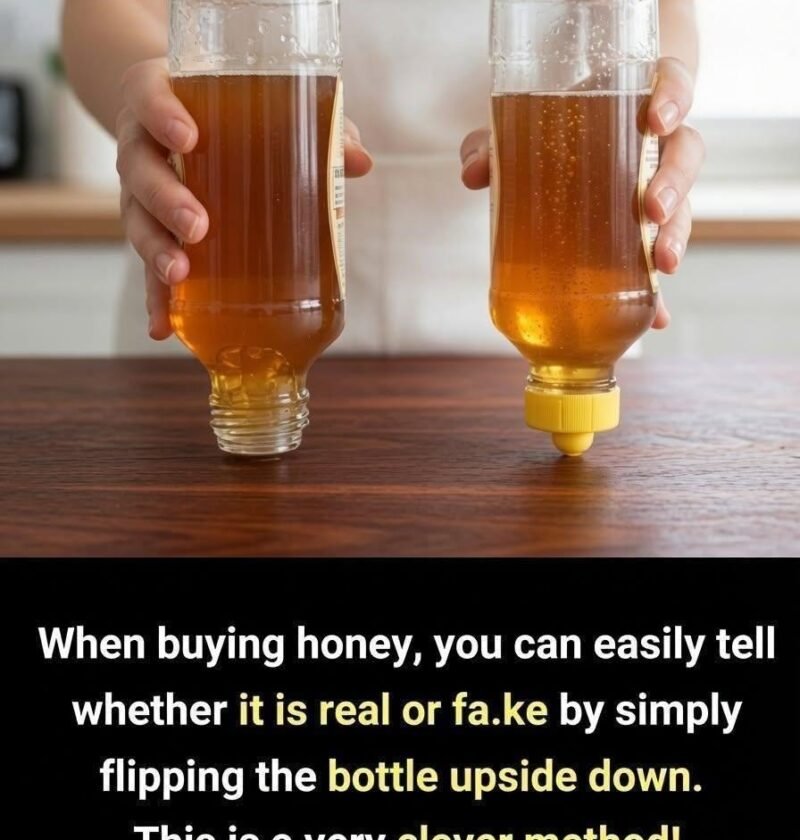
Why the “Flip-the-Bottle” Trick Fails
-
Viscosity Can Be Mimicked: Manufacturers can thicken sugar syrups (like corn, rice, cane, or high-fructose syrups) with thickeners, high sugar concentration, or low moisture so they flow slowly and send up a slow bubble just like raw honey.
-
Real Honey Isn’t Always Thick: Fresh or warmer honey—or varieties naturally higher in moisture or certain floral nectars—can pour much more freely than cool, dense honey without being “fake.”
-
Other Viral “Kitchen Tests” Have Limits Too: Tricks like dissolving honey in water, burning it with a match, or seeing if it crystallizes are also unreliable on their own. In fact, natural crystallization (turning cloudy, thick, or grainy) is a normal sign of real honey high in glucose—not proof of added sugar—and some adulterated syrups are specifically formulated not to crystallize.
How to Spot Quality Issues & Buy Safer Honey
-
Check Labels and Trusted Sources: Look for clear labeling (such as single-origin or reputable domestic/international producers with quality testing), avoid mystery unlabelled bottles sold at steep discounts, and check ingredient lists for added syrups or flavors.
-
Lab Testing Is the True Standard: Authentic honey verification relies on laboratory methods—such as stable carbon isotope ratio analysis, NMR spectroscopy, or LC-MS sugar profiling—that detect plant/sugar origins and added syrups that the eye cannot see.
-
Food Safety Note on Raw Honey: Never give any honey (raw or pasteurized) to infants under 12 months old, due to the risk of infant botulism.