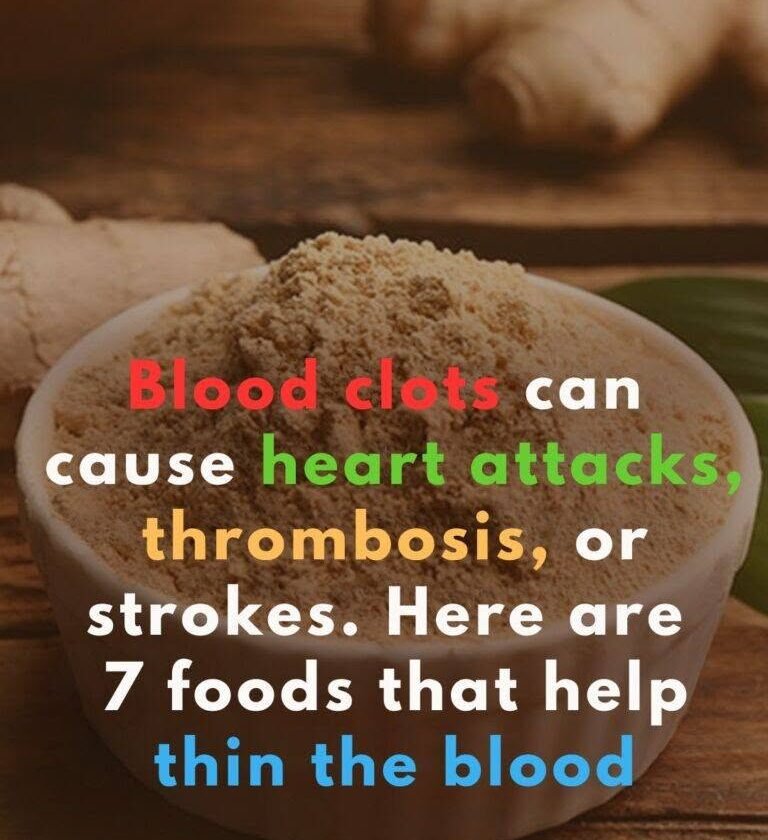
7 Foods Often Called “Natural Blood Thinners” — What You Should Know
You may have heard that certain foods can “thin the blood.” The reality is more complicated. Foods are not substitutes for prescribed anticoagulant or antiplatelet medicines, and some foods or concentrated supplements can interact with these medications.
Here are seven foods commonly discussed in relation to blood clotting:
1. Garlic
Garlic contains compounds that may affect platelet activity. However, the evidence is not strong enough to consider ordinary garlic a medical blood thinner. Garlic supplements may increase bleeding risk, particularly when combined with anticoagulants or aspirin.
2. Ginger
Ginger has been studied for several health effects, but claims that it reliably “thins the blood” are stronger than the available evidence. Concentrated supplements may have medication interactions, so people taking anticoagulants should discuss them with a healthcare professional.
3. Turmeric
Turmeric contains curcumin and is commonly used in cooking. Research on its effects on clotting is still limited, and turmeric supplements should not be used as a replacement for prescribed blood-thinning treatment. Supplements can also cause side effects and interact with medications.
4. Fatty fish
Salmon, sardines, and other fatty fish provide omega-3 fatty acids and can be part of a heart-healthy diet. Eating fish is different from taking concentrated fish-oil supplements, however, and neither should be considered a replacement for prescribed anticoagulants.
5. Berries
Berries such as blueberries and strawberries provide polyphenols and other beneficial nutrients. They can be part of an overall heart-healthy eating pattern, but they should not be described as powerful blood thinners.
6. Green leafy vegetables
Spinach, kale, collard greens, and similar vegetables are excellent sources of vitamin K. Interestingly, vitamin K is involved in normal blood clotting, so these foods aren’t “blood thinners.”
If you take warfarin, you generally don’t need to eliminate leafy greens—but you should keep your vitamin-K intake reasonably consistent because sudden dietary changes can alter warfarin’s effect.
7. Pomegranate
Pomegranate contains numerous plant compounds and can be part of a healthy diet. However, evidence that eating pomegranate meaningfully “thins the blood” is insufficient to use it for preventing or treating blood clots.
Important if you take a blood thinner
Do not deliberately add large amounts of these foods or start herbal supplements to try to make your blood thinner. Prescription anticoagulants are carefully dosed because both inadequate anticoagulation and excessive anticoagulation can be dangerous.
If you’re taking warfarin, apixaban, rivaroxaban, dabigatran, aspirin, clopidogrel, or another blood-thinning medicine, check with your doctor or pharmacist before starting concentrated herbal products or making major dietary changes.
The safest approach is a balanced diet and consistent eating habits—not trying to “thin your blood naturally.”