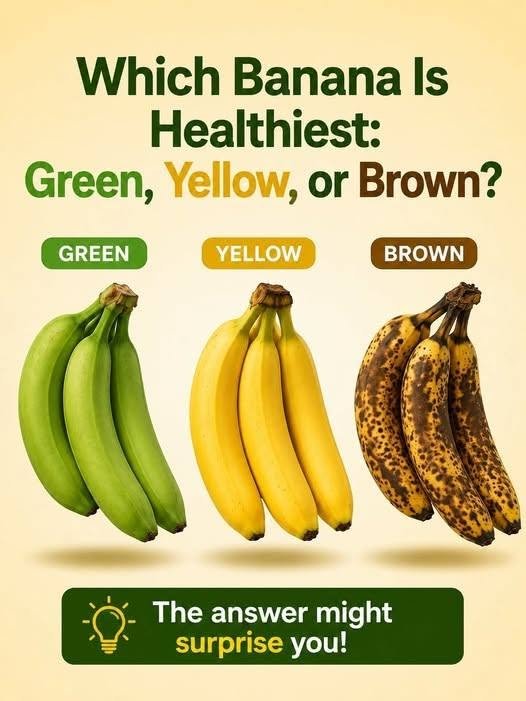
There is no single “healthiest” banana—as a banana ripens from green to yellow to brown, its enzymes convert complex starch into simple sugars, shifting its nutritional benefits depending on your digestive and blood-sugar goals.
How Ripeness Changes a Banana’s Nutrition
| Ripeness Stage | What Happens Inside | Best For | Potential Downsides |
| Green (Unripe) | Up to 70–80% of carbs are resistant starch (acts like soluble fiber) and pectin; low sugar. | Blood sugar control (lowest glycemic impact), gut microbiome support, longer fullness. | Harder to digest; can cause gas or bloating, and tastes firm and starchy. |
| Yellow (Ripe) | Resistant starch converts into simple sugars (sucrose, glucose, fructose); antioxidants rise. | Quick, easily digested energy (pre- or post-workout), gentle digestion, balanced sweetness. | Higher glycemic response than green bananas. |
| Brown-Spotted (Overripe) | Nearly all starch has turned into free sugars; antioxidant levels peak as chlorophyll breaks down. | High antioxidant intake, soothing an upset stomach, natural baking sweetener, very easy digestion. | Fastest blood-sugar spike; lower fiber and slightly lower heat-sensitive vitamin C/B vitamins. |
(Regardless of ripeness, a medium banana supplies roughly 100–110 calories, 400–420 mg of potassium, vitamin B6, and manganese.)
Which One Should You Pick?
-
Choose Green / Barely Yellow if: You are managing diabetes, insulin resistance, or prediabetes, or want steady energy without a sharp glucose spike.
-
Choose Firm Yellow if: You want an everyday snack that digests comfortably while still offering moderate fiber and natural sweetness.
-
Choose Brown-Spotted if: You want quick fuel before intense exercise, have a sensitive stomach, or need natural sweetness for smoothies, oatmeal, or baking (letting you skip added sugar).
-
Skip Moldy or Fermenting Bananas: Brown sugar spots on the peel are normal and safe, but discard any banana with fuzzy mold, leaking liquid, or a sour, fermented alcohol smell.
Practical tip for blood sugar balance: If you prefer sweet yellow bananas but want to blunt the blood-sugar spike, pair one with a source of protein and healthy fat—such as a handful of almonds or walnuts, unsweetened Greek yogurt, or a spoonful of peanut butter.