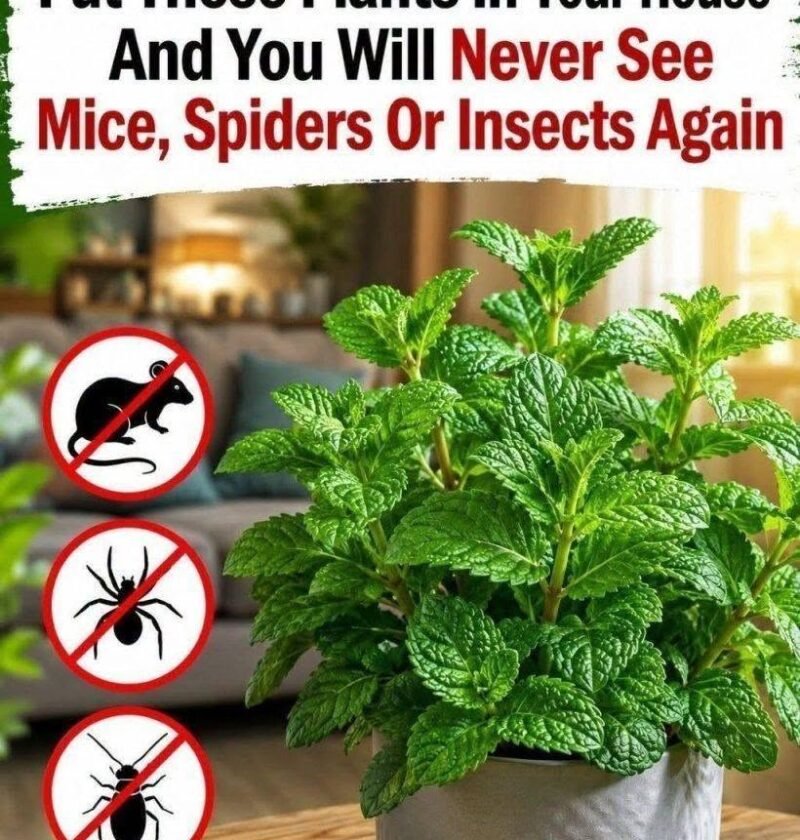
Aromatic herbs and flowers release volatile oils that deter many mice, spiders, and insects, though living plants work best as mild deterrents alongside sealing entry points and removing food or water sources.
8 Pest-Deterrent Plants
| Plant | Target Pests | Key Scent / Compound | Placement & Growing Tip |
| Peppermint | Mice, spiders, ants, mosquitoes | Menthol and mint oils | Grow in pots (mint spreads aggressively in beds); place near doors, vents, or pantries. |
| Lavender | Moths, mosquitoes, fleas, spiders | Linalool and camphor | Needs full sun and well-draining soil; place by sunny windows or outdoor seating. |
| Rosemary | Carrot rust flies, cabbage moths, mosquitoes | Cineole and camphor | Thrives in sunny spots with moderate watering; place near patios, doorways, or garden beds. |
| Citronella | Mosquitoes and some flying insects | Citronella oil | Place around patios and entryways; crushed leaves release more scent than intact foliage. |
| Marigold | Aphids, thrips, soil nematodes, mosquitoes | Tagetes root and leaf compounds | Plant around vegetable beds and borders in full sun for garden pest support. |
| Basil | Mosquitoes, houseflies, whiteflies | Eugenol and estragole | Keep on sunny windowsills or kitchen ledges; pinch flower buds to keep leaves flavorful. |
| Chrysanthemum | Ants, roaches, ticks, silverfish, fleas | Pyrethrin compounds | Grow in bright light or garden borders; keep away from pets if chewed. |
| Lemongrass | Mosquitoes and garden insects | Citral and citronella scent | Grow in large pots or warm borders; trim stalks periodically to release aroma. |
Practical Limits & Pet Safety
-
Realistic expectations: Intact plants only emit modest scent unless leaves are brushed or crushed, so they reduce nuisance activity rather than stopping an established rodent or insect infestation on their own.
-
Pair with exclusion: Seal gaps around doors and pipes, store food in airtight containers, and eliminate standing water for lasting control.
-
Pet and child safety: Plants such as chrysanthemum, lavender, and citronella can irritate pets or humans if ingested—keep toxic or irritating plants out of reach of cats, dogs, and small children.