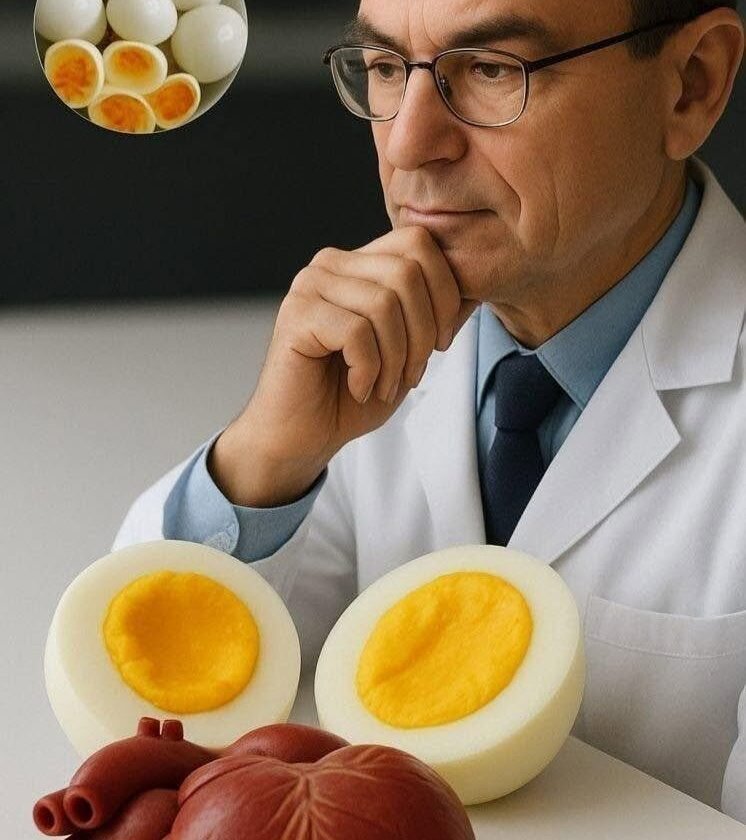
Why Boiled Eggs Got Redeemed (The Real Science)
-
Dietary Cholesterol Has Less Impact Than Saturated Fat: For decades, eggs were blamed for heart disease because one large yolk contains about 185–200 mg of cholesterol. Large long-term cohort studies and clinical trials now show that for most people, saturated fat and trans fat raise blood LDL (“bad”) cholesterol far more than dietary cholesterol from eggs—and a boiled egg is low in saturated fat (~1.6 g) with zero added frying oils.
-
High-Quality Protein & Satiety: One large boiled egg provides roughly 6 grams of complete protein plus nutrients like choline, lutein, zeaxanthin, vitamin D, and B12, keeping you full longer and reducing mid-morning blood sugar spikes and refined-carb snacking.
-
Modest HDL (“Good” Cholesterol) Lift: Moderate egg intake can slightly raise protective HDL particles and shift LDL particles toward larger, less atherogenic forms in healthy individuals.
Where the Clickbait Headline Overstates Things
-
Not a Cardiac Cure or Shield: Eggs do not reverse arterial plaque, lower high blood pressure on their own, or replace statins, fiber, olive oil, nuts, and regular cardio exercise.
-
Preparation Method Matters: A boiled or poached egg keeps calories (~70–75 kcal) and saturated fat low. Frying eggs in heavy butter, ghee, or palm oil alongside processed sausages or white parathas changes the cardiovascular equation completely.
Who Still Needs Moderation With Whole Eggs
-
People With Type 2 Diabetes or Existing Heart Disease: Some observational studies link eating more than 7 whole eggs per week in people with diabetes to higher cardiovascular risk. Sticking to 3 to 5 whole eggs per week—or mixing 1 whole egg with extra egg whites (which have zero cholesterol and fat)—is a safer approach.
-
Genetic “Hyper-Responders” or High LDL Cholesterol: Roughly 20–25% of people experience a sharper rise in LDL cholesterol from dietary cholesterol. If your LDL is elevated despite diet changes, check your lipid panel after adjusting egg intake.