Ah, the classic foot-symptom clickbait cliffhanger!
When you see a headline telling you that your feet are secretly trying to tell you something terrifying, it’s usually trading on the fact that your extremities really can reflect systemic health. Because your feet are farthest from your heart and packed with tiny blood vessels and nerve endings, they often show the earliest signs of circulation trouble, nerve damage, or nutritional shortfalls.
While these articles love to jump straight to doomsday scenarios, here are the actual medical reasons behind 9 common foot symptoms that doctors look at:
1. Chronic Cold Feet
-
What it means: Constantly icy toes and feet, even when you’re wearing thick socks indoors.
-
The reality: Often just poor peripheral circulation (common if you sit all day), but persistent, severe coldness in the feet can also point to Raynaud’s phenomenon, low thyroid function (hypothyroidism), or peripheral artery disease (PAD), where narrowed arteries restrict blood flow.
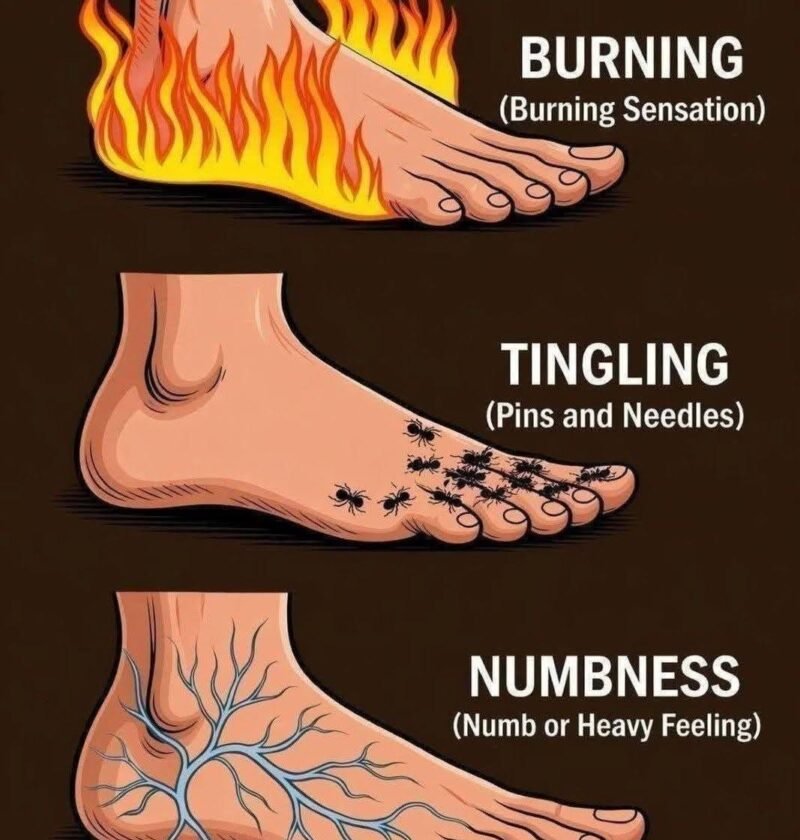
2. Numbness or a “Pins and Needles” Feeling
-
What it means: A loss of sensation or a prickling feeling in your soles and toes.
-
The reality: If it happens occasionally, it’s just a harmless compressed nerve from sitting cross-legged. If it’s persistent, doctors immediately check for peripheral neuropathy, which is heavily linked to unmanaged blood sugar (diabetes) or Vitamin B12 deficiencies.
3. Painful, Burning Soles
-
What it means: A fiery, hot sensation, particularly across the balls of your feet or heels, often worse at night.
-
The reality: This is another classic hallmark of small-fiber nerve irritation, often tied to diabetic neuropathy, vitamin deficiencies, or chronic heavy alcohol use.
4. Swollen Ankles and Feet (Edema)
-
What it means: Puffy feet where your socks leave deep, indented rings by the end of the day.
-
The reality: While standing for hours or long flights can cause mild fluid retention, chronic swelling in both feet can point to sluggish circulation, heart or kidney strain, or even side effects from certain blood pressure medications. (As we noted with blood clots earlier, sudden swelling in just one leg is a completely different story!)
5. Spoon-Shaped or Brittle Toenails
-
What it means: Toenails that flake, split, or curve upward at the edges.
-
The reality: Just like fingernails, your toenails need proper nutrition to grow. Thin or spoon-shaped nails often hint at chronic iron deficiency (anemia) or a lack of proper protein and B-complex vitamins.
6. Cramping and “Charley Horses” in the Arch or Calf
-
What it means: Sudden, intensely painful muscle spasms that lock up your foot or lower leg.
-
The reality: Usually caused by muscle fatigue, dehydration, or an electrolyte imbalance (like a shortage of magnesium, potassium, or calcium).
7. Slow-Healing Sores or Blisters
-
What it means: A minor cut, scrape, or blister on your foot that takes weeks to heal or refuses to close up.
-
The reality: This is a major red flag for compromised circulation or elevated blood sugar, which impairs your body’s natural immune response and tissue repair. (Diabetic foot care heavily emphasizes checking for hidden sores because nerve damage means you might not feel them developing).
8. Painful Lumps or Thickened Skin (Corns and Calluses)
-
What it means: Hard, thickened patches of skin developing over bony prominences.
-
The reality: Unlike internal health issues, this is usually purely mechanical—your foot structure, gait, or tight-fitting shoes are creating chronic friction and pressure points.
9. A Big Toe That Suddenly Turns Red, Hot, and Excruciatingly Painful
-
What it means: A sudden, blindingly painful flare-up in the joint of the big toe, making even the weight of a bedsheet feel unbearable.
-
The reality: This is the classic presentation of a gout attack—a form of inflammatory arthritis caused by a buildup of uric acid crystals settling into the joint.
💡 The Bottom Line: Your feet are fantastic indicators of your overall circulation and nervous system. While a random cramp or cold toes from sitting still isn’t a crisis, persistent numbness, burning pain, or sores that won’t heal are definitely worth mentioning to a doctor.
Did this particular article try to claim that foot pain is an automatic sign of a specific hidden disease, or did it try to sell you a pair of “magical” magnetic insoles?