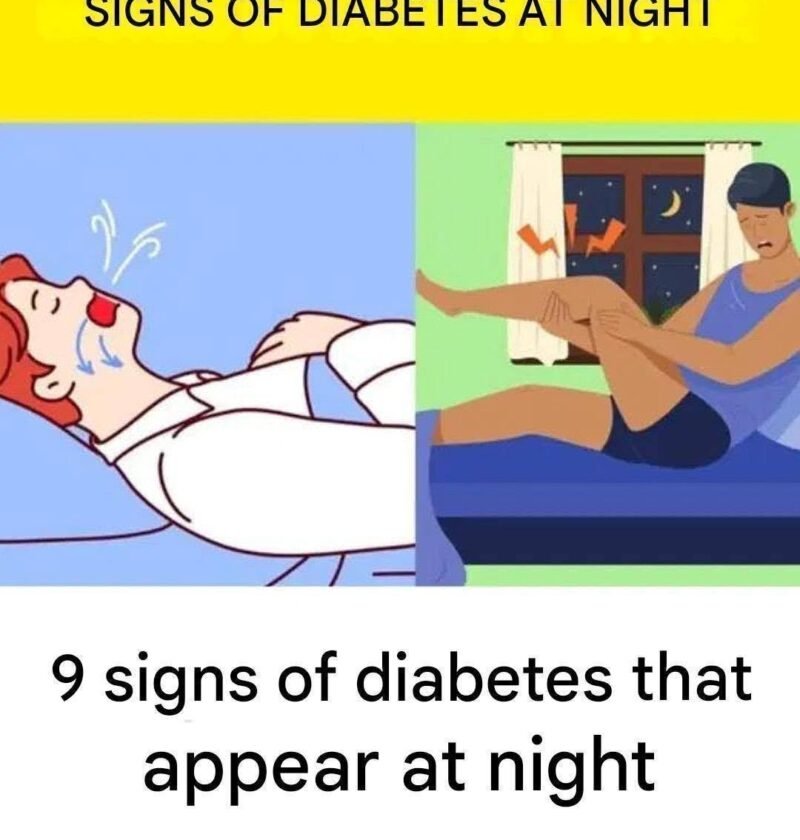
9 Nighttime Symptoms Linked to Uncontrolled Blood Sugar
-
Frequent Nighttime Urination (Nocturia): When blood glucose runs too high, the kidneys work overtime to filter excess sugar into urine, pulling extra water with it. Waking up two or more times every night to urinate is one of the earliest noticeable clues.
-
Waking Up Extremely Thirsty With a Dry Mouth: Losing fluid through frequent urination triggers dehydration, making you wake up reaching for water repeatedly through the night.
-
Night Sweats (From Overnight Blood Sugar Drops): In people already taking insulin or certain diabetes pills (such as sulfonylureas), blood sugar can dip too low during sleep (nocturnal hypoglycemia), triggering an adrenaline surge that causes drenching cold sweats, a racing heart, and restlessness.
-
Burning, Tingling, or “Pins and Needles” in Feet and Legs: Prolonged high blood sugar irritates peripheral nerves (diabetic neuropathy). Nerve pain and tingling classically feel worse at night when feet are warm under blankets and external distractions fade.
-
Painful Nighttime Calf or Foot Cramps: Dehydration, electrolyte shifts from frequent urination, and poor circulation can trigger sudden leg cramps during sleep.
-
Restless, Fragmented Sleep or Vivid Nightmares: Both overnight blood sugar spikes and sudden dips disrupt deep REM sleep, causing frequent awakenings, irritability, or vivid dreams.
-
Waking Up Exhausted Despite a Full Night in Bed: Fragmented sleep combined with cells unable to use glucose efficiently leaves you groggy and drained first thing in the morning.
-
Morning Headaches or Unexplained High Morning Blood Sugar: Overnight dehydration or rebound blood sugar swings (such as the dawn phenomenon, where early-morning hormones raise glucose) can cause dull morning headaches and dry eyes.
-
Increased Nighttime Hunger or Reflux: When insulin resistance prevents glucose from entering cells for fuel, the body signals false hunger late at night, while slowed stomach emptying (diabetic gastroparesis) can worsen nighttime heartburn when lying flat.
Important Context: Other Common Causes
Simple Tests That Give a Definitive Answer
-
Fasting Plasma Glucose (FPG): Normal is less than 100 mg/dL; prediabetes is 100–125 mg/dL; diabetes is 126 mg/dL or higher on two separate tests.
-
HbA1c (3-Month Average Blood Sugar): Normal is below 5.7%; prediabetes is 5.7%–6.4%; diabetes is 6.5% or higher.