Headlines warning about “6 still overlooked signs of a silent heart attack” refer to a real and clinically important condition: a silent myocardial infarction (SMI). Unlike a dramatic movie-style heart attack with crushing chest pain, a silent heart attack occurs when blood flow to part of the heart muscle is blocked with mild, vague, or completely absent chest pain—often discovered only weeks or months later on an electrocardiogram (ECG) or echocardiogram.
Research suggests silent heart attacks account for 20% to 45% of all heart attacks, and they are especially common in people with diabetes (due to nerve blunting), older adults, and women.
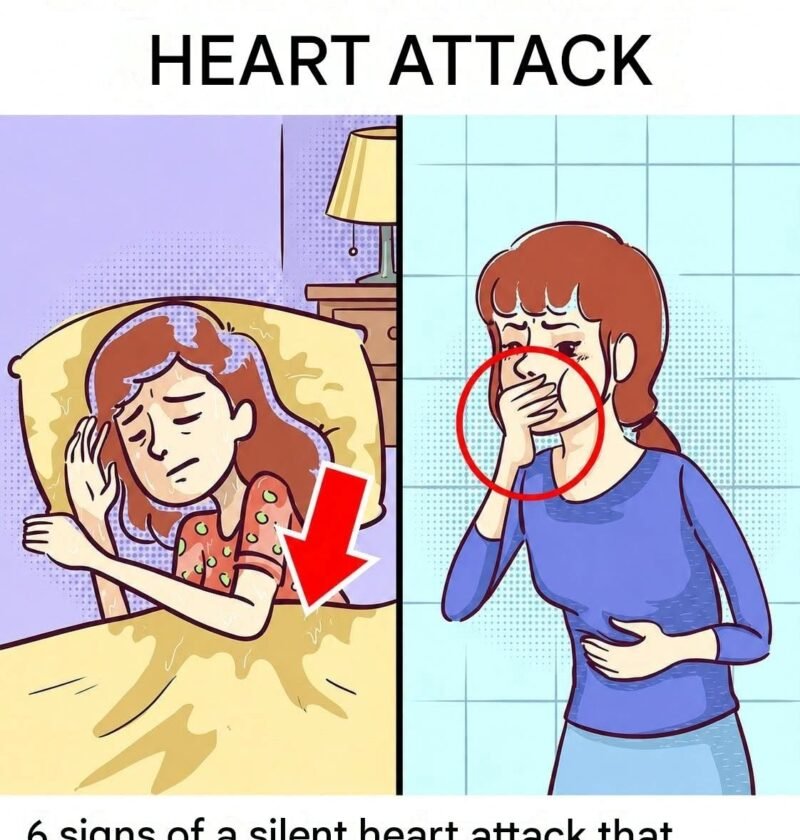
6 Commonly Overlooked Signs of a Silent Heart Attack
-
Unexplained, Sudden Fatigue or Exhaustion: Feeling completely drained after routine tasks you normally handle easily—like making the bed, climbing one flight of stairs, or walking a short distance—because the heart muscle is suddenly pumping less efficiently.
-
Shortness of Breath Without Obvious Chest Pain: Feeling winded, air-hungry, or unable to catch your breath during light activity or even while lying flat in bed, often mistaken for poor fitness, asthma, or aging.
-
Mild Chest Pressure, Fullness, or “Indigestion”: Instead of sharp pain, many people feel a dull ache, squeezing, tightness, or burning in the center of the chest that feels like heartburn, trapped gas, or acid reflux and may seem to ease briefly with rest or antacids.
-
Discomfort Radiating to the Jaw, Neck, Upper Back, or One/Both Arms: Aching, heaviness, or numbness in the jaw, throat, between the shoulder blades, or down the left (or right) arm—frequently dismissed as a pulled muscle, dental pain, or cervical neck stiffness.
-
Breaking Out in a Cold Sweat: Sudden, clammy sweating without exercise or hot weather, triggered by the body’s acute stress response to reduced heart blood flow.
-
Sudden Lightheadedness, Dizziness, or Unexplained Nausea: Feeling faint, woozy, or mildly nauseous without a stomach bug—caused by a temporary drop in blood pressure and cardiac output.
Why Silent Heart Attacks Are Just as Serious as Classic Ones
Even without severe pain, a silent heart attack leaves permanent scar tissue on the heart muscle, raising the future risk of heart failure, dangerous heart rhythms (arrhythmias), and a second, potentially fatal heart attack. Because the person never realized they had an event, they often miss out on life-saving medications (such as aspirin, statins, beta-blockers, or ACE inhibitors) and artery evaluations.
When to Seek Immediate Medical Evaluation
Call emergency services or go to an urgent cardiac center immediately if any of these subtle symptoms appear suddenly, last more than 10–15 minutes, worsen with light exertion, or occur in clusters—especially if you have diabetes, high blood pressure, high cholesterol, a smoking history, or a family history of heart disease. A simple 12-lead ECG and a high-sensitivity troponin blood test can quickly confirm whether the heart muscle is under stress or injured.