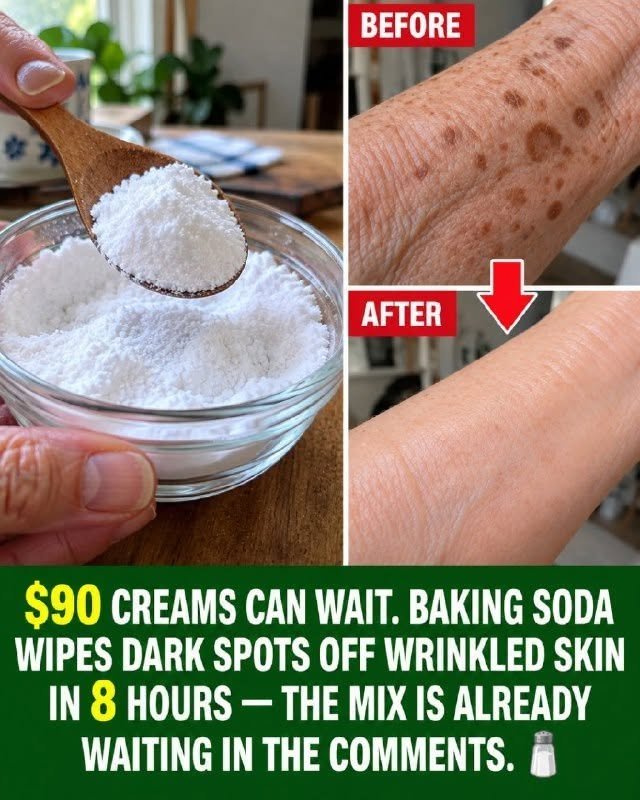
Why Baking Soda “Spot & Wrinkle” Mixes Backfire
-
Alkaline pH Disrupts the Skin Barrier: Healthy skin has a slightly acidic acid mantle (around pH 4.5–5.5) that keeps moisture in and microbes and irritants out. Baking soda is strongly alkaline (around pH 8–9), which strips protective lipids, leaves skin dry, tight, and reactive, and makes fine lines look sharper from dehydration.
-
Friction & Irritation Trigger Rebound Darkening: Gritty pastes or mixes combined with lemon juice, vinegar, or salt irritate the skin barrier and stimulate pigment-producing cells—frequently causing post-inflammatory hyperpigmentation (darker patches than before), especially in medium-to-deep skin tones.
-
Why “Quick Results” Are Illusions: Any temporary lightening or tightness after washing off a paste is usually brief surface dryness, slight swelling/irritation, or surface residue—not true removal of melanin or reversal of skin aging.
What Actually Helps Dark Spots & Aging Skin Safely
-
Daily Broad-Spectrum Sunscreen (SPF 30–50+): Protecting exposed areas (like the face, neck, and backs of hands) every morning—and reapplying during extended sun exposure—stops UV rays from darkening existing spots, forming new ones, and breaking down collagen further.
-
Targeted Topicals Over Weeks: Evidence-backed skincare ingredients work gradually over 6–12+ weeks rather than overnight:
-
Pigment & tone: Vitamin C, azelaic acid, niacinamide, or kojic acid.
-
Texture & fine lines: Retinoids (such as retinol or prescription tretinoin) and gentle chemical exfoliants (like lactic or glycolic acid), paired with a plain barrier moisturizer to prevent irritation.
-
-
Dermatologist Procedures (When Wanted): In-office options such as chemical peels, cryotherapy, laser/light treatments, or microneedling can target stubborn spots or texture more directly once a clinician evaluates your skin type and spot safety.
When to Have Skin Spots Checked
-
Routine Visit (Within 2–7 Days or Next Appointment): Book a visit with a dermatologist or doctor if you want safe, personalized options for sun spots or fine lines without trial-and-error irritation.
-
Prompt Medical Evaluation: Get a spot checked promptly if it is new or changing in size, shape, or color, has irregular borders or mixed colors, bleeds, crusts, oozes, or fails to heal, or looks distinctly different from surrounding spots.