When viral articles or health posts flash headlines like “If you have these 9 symptoms in your feet, it’s a sign that…” they are almost always pointing toward a widespread, often silent condition: peripheral neuropathy or chronic circulatory compromise.
Your feet are remarkably complex structures packed with intricate nerve endings and tiny blood vessels, making them an exceptionally sensitive early-warning system for your overall health. Because they sit the farthest from your heart, they are often the very first place the body displays distress signals.
Here are 9 key foot symptoms that doctors look for, what they usually mean, and why you shouldn’t ignore them:
9 Foot Symptoms and What They May Be Telling You
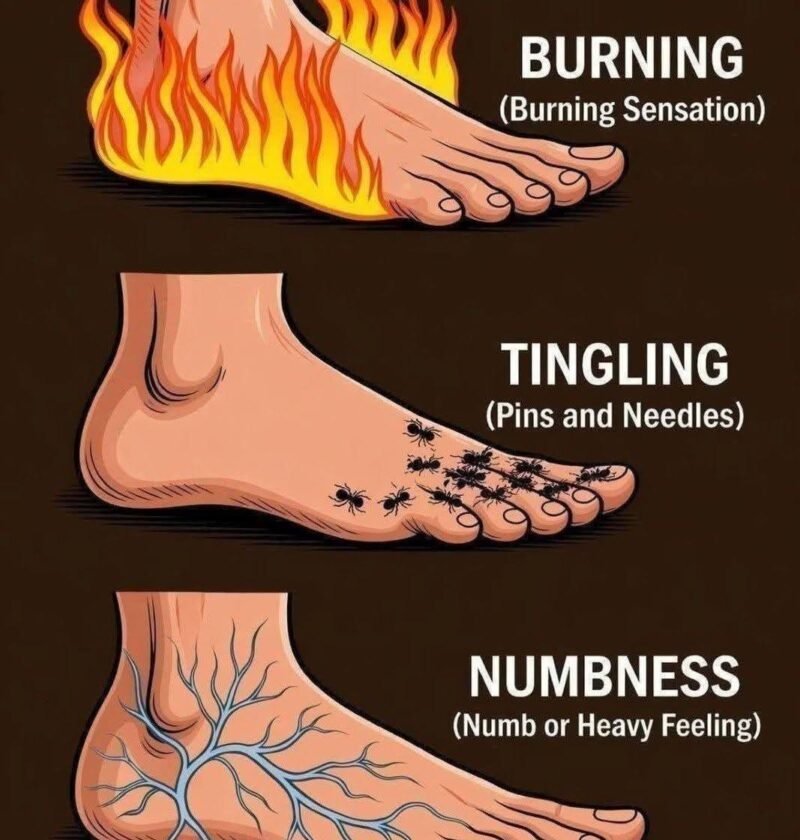
1. Chronic “Pins and Needles” or Tingling (Paresthesia)
-
What it means: A persistent prickling sensation, especially when resting or at night, is a classic hallmark of peripheral nerve irritation or early nerve damage.
-
Common Root Causes: Vitamin B12 deficiency, early-stage diabetic neuropathy, or pinched nerves in the lower spine (sciatica).
2. Numbness or Loss of Sensation
-
What it means: If you cannot feel a light touch, temperature changes, or pebbles in your shoe, your sensory nerves are failing to transmit signals to the brain.
-
Common Root Causes: Uncontrolled blood sugar levels affecting the small nerve fibers (peripheral neuropathy), or chronic poor circulation depriving nerves of oxygen.
3. Cold Feet That Never Seem to Warm Up
-
What it means: Chronically ice-cold toes and feet—even in a warm room—suggest that warm, oxygenated blood is struggling to reach the body’s furthest extremities.
-
Common Root Causes: Poor peripheral circulation, Peripheral Artery Disease (PAD), or an underactive thyroid (hypothyroidism) slowing your metabolism.
4. Painful Cramps or Spasms in the Arches and Calves
-
What it means: Sudden, painful muscle contractions or spasms in the foot muscles or lower legs, particularly when waking up or stretching.
-
Common Root Causes: Electrolyte imbalances (low magnesium, potassium, or calcium), severe dehydration, or muscle fatigue from circulatory strain.
5. Slow-Healing Sores, Blisters, or Cuts
-
What it means: A tiny blister or scratch on your foot that takes weeks to heal or easily becomes inflamed.
-
Common Root Causes: Compromised blood flow (which starves wounds of infection-fighting white blood cells and nutrients) or undiagnosed diabetes, which impairs the body’s natural healing response.
6. Shiny, Hairless Skin on the Toes and Lower Legs
-
What it means: If the hair on your toes suddenly stops growing and the skin on your feet looks unusually thin, tight, shiny, or hairless.
-
Common Root Causes: Advanced arterial insufficiency—meaning blood flow has decreased so significantly that hair follicles and skin cells can no longer sustain normal growth.
7. Unexplained Burning or Aching Pain (Especially at Night)
-
What it means: A deep, burning ache in the soles of your feet or toes that often flares up intensely once you crawl into bed and relax.
-
Common Root Causes: Small fiber neuropathy, nerve compression, or systemic inflammation related to metabolic stress.
8. Discolored Toes (Pale, Blue, or Deep Purple)
-
What it means: Toes that turn stark white, bluish, or dark purple when exposed to cold temperatures or emotional stress.
-
Common Root Causes: Vasospastic conditions like Raynaud’s phenomenon, where small blood vessels temporarily spasm and shut off blood flow to the fingers and toes.
9. Weakness or Loss of Balance / Coordination
-
What it means: Frequently stumbling, feeling unsteady on your feet, or feeling like your ankles are “giving out” without a joint injury.
-
Common Root Causes: Sensory neuropathy (loss of proprioception, meaning your brain no longer accurately senses where your feet are positioned in space).
Why Foot Symptoms Matter So Much
Your feet act as the diagnostic canary in the coal mine. Conditions like Type 2 diabetes, vitamin deficiencies, cardiovascular disease, and autoimmune disorders frequently announce themselves in the feet long before they create systemic crises elsewhere in the body.
When to See a Doctor Immediately
While minor muscle cramps or cold feet can often be resolved with warm socks, hydration, and gentle movement, schedule a prompt medical evaluation if you notice:
-
Numbness or loss of sensation combined with any unexplained skin break or sore.
-
Sudden, severe pain, coldness, or color changes (turning pale or blue) in just one foot.
-
Persistent swelling or signs of infection around a toenail or wound.