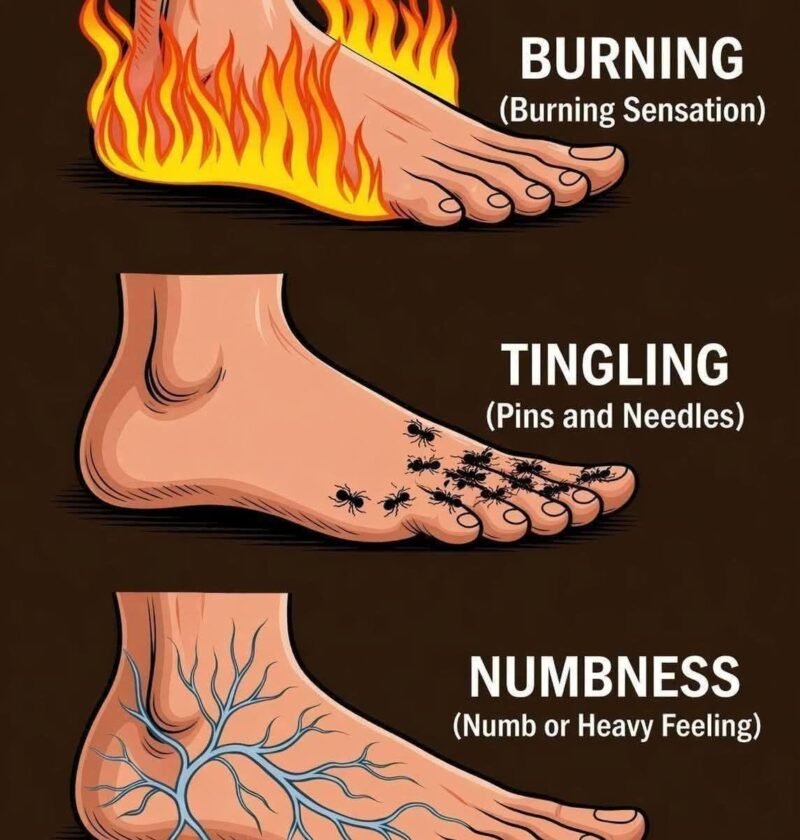
Experiencing burning, numbness, and tingling in the feet—often referred to collectively as peripheral neuropathy or “burning feet syndrome”—is a common and uncomfortable sign that the nerves in your lower extremities are irritated, compressed, or damaged.
Common Causes of Foot Burning, Numbness, and Tingling
-
Diabetic Neuropathy
-
What it is: Prolonged high blood sugar levels can damage delicate peripheral nerves and the small blood vessels that supply them.
-
Symptoms: Often starts as a symmetrical “stocking-glove” tingling or numbness in both feet that may worsen at night.
-
-
Vitamin Deficiencies (Particularly B Vitamins)
-
What it is: A lack of essential vitamins—especially Vitamin B12, B1 (thiamine), B6, or folate—impairs nerve sheath maintenance and signal transmission.
-
Symptoms: Pins-and-needles sensations, numbness, and balance issues. B12 deficiency is especially common in older adults or individuals following strict plant-based diets without supplementation.
-
-
Nerve Compression (e.g., Tarsal Tunnel Syndrome or Sciatica)
-
What it is: Physical pinching or entrapment of a nerve. Tarsal tunnel syndrome involves compression of the tibial nerve inside the ankle, while lower back issues (like a herniated disc or sciatica) can radiate nerve pain, numbness, and tingling down the leg into the foot.
-
-
Poor Circulation (Peripheral Artery Disease)
-
What it is: Narrowed arteries reduce blood flow to the lower legs and feet, depriving nerves and muscles of oxygen-rich blood.
-
Symptoms: Heaviness, coldness, tingling, or cramping pain in the feet that may occur during walking (claudication) or at rest.
-
-
Other Potential Contributors
-
Chronic alcohol use, thyroid disorders, kidney disease, certain medications (such as chemotherapy drugs), or ill-fitting footwear that constricts nerves.
-
Immediate Comfort Measures and Home Care
While home remedies do not treat the underlying nerve pathology, they can help soothe acute discomfort:
-
Cool (Not Ice-Cold) Foot Soaks: Soaking your feet in cool water for 10 to 15 minutes can temporarily numb a burning sensation. Avoid extreme ice or direct freezing packs, as damaged nerves make it harder to sense temperature, risking skin injury.
-
Gentle Massage and Elevation: Massaging the feet upward toward the ankles can stimulate localized blood flow, while elevating your feet at the end of the day reduces swelling.
-
Comfortable Footwear: Wear supportive, wide-toe-box shoes with cushioned insoles to relieve pressure points and localized nerve compression.
When to See a Doctor
Because burning and numbness can signal progressive nerve damage or systemic medical conditions, you should schedule an evaluation with a physician or neurologist if:
-
The numbness or burning is persistent, worsens over time, or begins spreading up your legs.
-
You notice open sores, skin discoloration, or signs of infection on your feet (especially critical if you have diabetes).
-
The symptoms interfere significantly with your sleep or ability to walk safely.