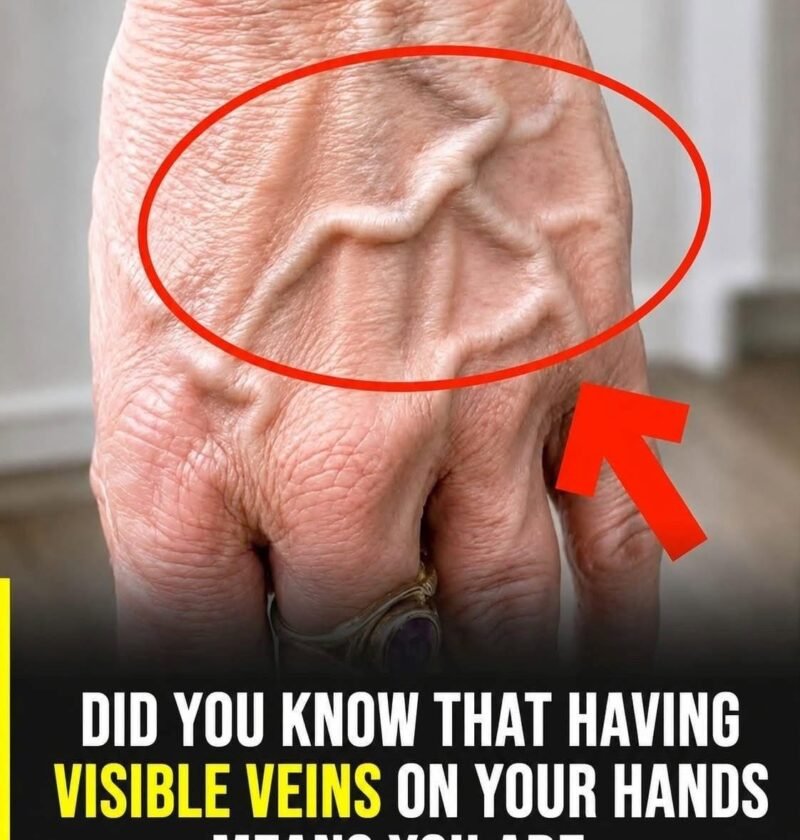
When people notice prominent or visible veins, it often sparks curiosity or concern about what it says about their health.
Having visible veins generally points to a few common physiological factors rather than a single universal meaning. Depending on where they appear and your body type, visible veins can mean several different things:
1. You Have Low Body Fat and Higher Muscle Mass
-
What it means: For many people (especially fitness enthusiasts, athletes, or very lean individuals), visible veins are completely normal.
-
Why it happens: Fat acts as a layer of insulation under the skin. When your body fat percentage drops and muscle definition increases, your veins are pushed closer to the surface and become much more pronounced—particularly on the arms, hands, legs, and abdomen.
2. Natural Aging and Thinning Skin
-
What it means: As we age, our skin naturally loses elasticity and thins out, and the layer of subcutaneous fat beneath it diminishes.
-
Why it happens: Because the protective cushion under the skin becomes thinner with time, veins on the hands, face, and legs naturally become more visible, even if your cardiovascular health is entirely normal.
3. Genetics and Skin Tone
-
What it means: Some people are simply genetically predisposed to having translucent skin or superficial veins that sit closer to the surface. Furthermore, lighter skin tones often make veins appear more noticeable (often looking blue or greenish) compared to darker skin tones.
4. Temporary Environmental or Physiological Factors
-
What it means: Veins can temporarily bulge or become more prominent due to:
-
Heat: Warm weather causes your blood vessels to dilate (expand) and move closer to the skin’s surface to help release body heat.
-
Exercise or Exertion: Heavy lifting or intense physical activity increases blood flow and muscle pressure, forcing surface veins to temporarily swell.
-
Pregnancy or Hormonal Shifts: Increased blood volume and hormonal relaxation of blood vessel walls can make veins more noticeable.
-
When Visible Veins Indicate an Underlying Medical Issue
While surface veins are usually harmless, prominent or bulging veins can sometimes signal venous insufficiency or varicose veins, especially in the legs. You should consult a doctor or vein specialist if your visible veins are accompanied by:
-
Persistent aching, throbbing, or a heavy, tired feeling in your legs.
-
Swelling in your lower legs, ankles, or feet.
-
Itchy, dry, or discolored skin around the veins.
-
Twisted, bulging, or cord-like veins that protrude significantly from the skin.