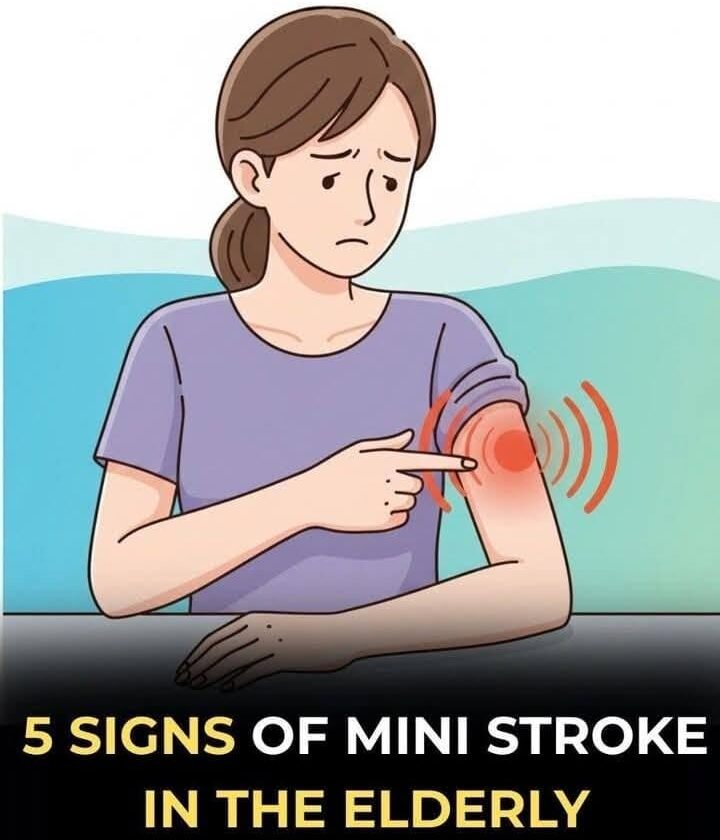
Recognizing the signs of a mini-stroke (medically known as a Transient Ischemic Attack or TIA) is critical. While symptoms are temporary and typically resolve within a few minutes to 24 hours, a TIA is a major warning sign that a full stroke may happen soon.
To easily remember and spot the most common warning signs, healthcare providers use the FAST acronym, along with one additional critical sign.
The 5 Key Signs
-
Face Drooping (F)
-
What to look for: One side of the face may droop or feel numb. When the person tries to smile, the smile is uneven.
-
-
Arm Weakness (A)
-
What to look for: Sudden weakness or numbness in one arm. If the person tries to raise both arms, one may drift downward or feel completely limp.
-
-
Speech Difficulty (S)
-
What to look for: Slurred speech, strange or garbled words, or an inability to speak at all despite seeming awake. You can test this by asking them to repeat a simple sentence (e.g., “The sky is blue”).
-
-
Sudden Confusion or Trouble Understanding
-
What to look for: Difficulty comprehending simple statements, sudden disorientation, or abrupt trouble speaking coherently.
-
-
Sudden Vision Changes (The Additional Critical Sign)
-
What to look for: Sudden blurriness, double vision, or a complete loss of vision in one or both eyes.
-
⚠️ What to Do: Act FAST
Even if the symptoms disappear completely within a few minutes, call emergency services (such as 911) immediately or get the person to the nearest emergency room.
-
Time is crucial: A TIA requires immediate medical evaluation to determine the cause and prevent a permanent, disabling stroke.
-
Never wait to see if it passes: Because TIA symptoms go away on their own, people often dismiss them as fatigue or aging—do not make this mistake.
Would you like to know more about the risk factors associated with TIAs, or steps you can take to help prevent strokes in older adults?