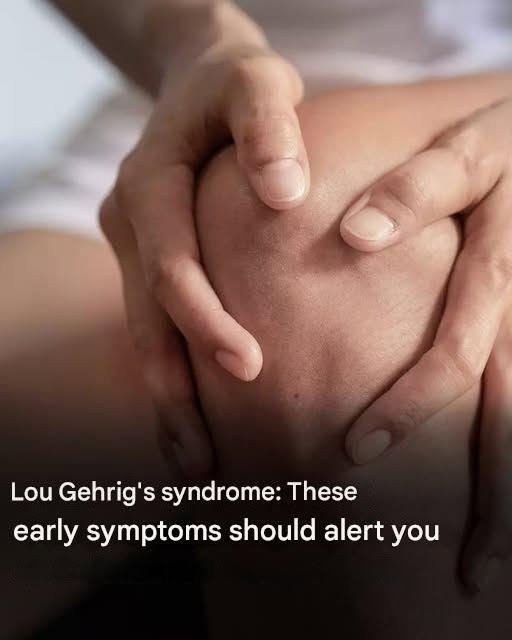
Lou Gehrig’s Disease: What Are the First Symptoms?
Lou Gehrig’s disease, medically called amyotrophic lateral sclerosis (ALS), is a progressive disease affecting nerve cells that control voluntary muscles. Its early symptoms can be subtle and vary considerably from person to person. (Mayo Clinic)
Early symptoms can include:
- Gradually increasing muscle weakness, often beginning in one hand, arm, leg, or foot.
- Dropping objects or difficulty with buttons, writing, or other fine movements.
- Tripping or falling more often than usual.
- Difficulty walking or performing familiar daily activities.
- Muscle twitching (fasciculations), sometimes accompanied by weakness.
- Muscle cramps.
- Slurred or slowed speech.
- Difficulty chewing or swallowing.
- Muscle stiffness or reduced coordination.
- Uncontrollable laughing or crying in some people. (Mayo Clinic)
Important: these symptoms don’t automatically mean ALS
Many much more common conditions can cause muscle twitching, cramps, weakness, or difficulty walking. ALS is diagnosed through a neurological examination and tests that help rule out other conditions; there isn’t one simple test that confirms it. Tests can include electromyography (EMG), nerve-conduction studies, imaging, and blood or other laboratory tests. (Mayo Clinic)
A particularly important feature is progressive weakness that continues to worsen, rather than an isolated muscle twitch or occasional cramp. (The ALS Association)
If someone develops new or progressively worsening muscle weakness, speech changes, or swallowing difficulties, they should arrange a medical evaluation—often starting with a doctor or neurologist.