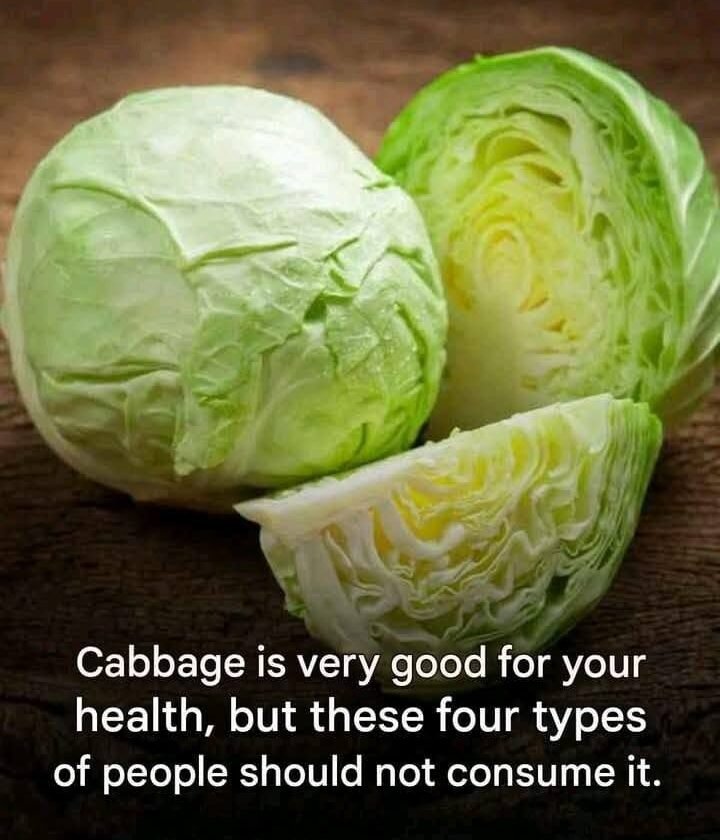
4 Types of People Who May Need to Be Careful With Cabbage
Cabbage is a nutritious vegetable and is safe for most people. However, certain people may need to limit it, prepare it differently, or discuss their diet with a healthcare professional.
1. People Taking Warfarin
Cabbage contains vitamin K, which can affect how warfarin works. You usually don’t need to completely avoid cabbage, but it is important to keep your vitamin K intake reasonably consistent from day to day. Sudden changes can affect your medication. (ods.od.nih.gov)
2. People With IBS or Sensitive Digestion
Cabbage can cause gas, bloating, or abdominal discomfort in some people, particularly when eaten raw. If cabbage triggers your symptoms, try a smaller portion or cooked cabbage.
3. People With Certain Thyroid Problems
Cabbage and other cruciferous vegetables contain compounds that can interfere with iodine use in certain circumstances. For most people eating normal amounts, this isn’t a reason to avoid cabbage. Cooking also reduces these compounds. People with thyroid disease who eat very large amounts of raw cruciferous vegetables should discuss their diet with a healthcare professional.
4. People Who Notice Cabbage Triggers Their Symptoms
Individual food sensitivities vary. If cabbage repeatedly causes diarrhea, severe bloating, abdominal pain, or another symptom, don’t force yourself to eat it. Keep track of what you eat and discuss persistent symptoms with a healthcare professional.
Should You Stop Eating Cabbage?
Not necessarily. Cabbage provides fiber, vitamin C, vitamin K, and other beneficial plant compounds. For most people, it can be part of a healthy, balanced diet.
Bottom line: Cabbage isn’t a dangerous food for most people. The main concerns are medication interactions, digestive sensitivity, and very high intake in certain circumstances—not simply being a particular age or having a common health condition.