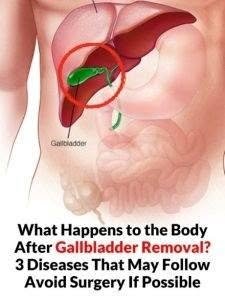
If you’re asking whether the claim “3 diseases may follow gallbladder removal, so avoid surgery if possible” is accurate, the evidence is more nuanced.
What actually happens after removal?
The gallbladder stores and concentrates bile, but your liver continues to make bile after the gallbladder is removed. The bile simply flows more continuously into the intestine. Most people can live normally without a gallbladder. NIDDK+1
Some people experience temporary or persistent digestive changes, particularly:
-
Diarrhea or softer, more frequent stools — increased bile reaching the intestine can contribute to this. NIDDK+1
-
Bloating or indigestion
-
Abdominal discomfort, sometimes described as post-cholecystectomy symptoms. nhs.uk
These aren’t usually “new diseases” caused by the operation.
Should surgery be avoided?
Not automatically. People with silent gallstones generally don’t need surgery, but symptomatic or complicated gallstones may require treatment. Gallstones can cause gallbladder inflammation, bile-duct infection/blockage, jaundice, or pancreatitis if they obstruct the ducts. NIDDK+1
Gallbladder removal itself does have surgical risks—including bleeding, infection, bile leakage, and bile-duct injury—but serious complications are uncommon. nhs.uk
So the sensible question isn’t simply “Can I avoid surgery?” It’s “Do my gallstones or gallbladder condition require surgery, and what are my alternatives and risks?” That depends on whether you have symptoms, inflammation, stones in the bile duct, pancreatitis, or another specific condition.
If you tell me why your doctor is recommending gallbladder removal (e.g., stones, pain, infection, polyps, pancreatitis), I can explain when surgery is usually recommended and what non-surgical options may exist.