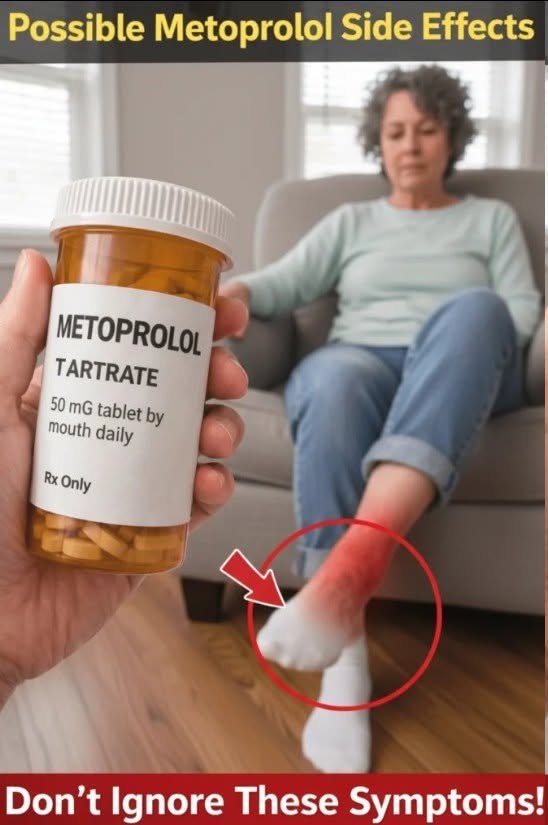
pain (angina), heart failure, and to improve survival after a heart attack. By blocking adrenaline receptors on the heart, it forces the heart to beat slower and with less force.
While it is a literal lifesaver for millions, getting used to how it alters your cardiovascular system can come with a challenging side effect profile.
The Good: Why It’s Prescribed
Metoprolol does an exceptional job at what it’s designed to do:
-
Protects the Heart: It lowers blood pressure and shields heart muscle tissue from the damaging wear-and-tear of chronic overexertion.
-
Reduces Cardiovascular Events: Clinical data consistently shows it lowers the risk of strokes, heart attacks, and sudden cardiac complications.
The Bad: The Mild-to-Moderate Side Effects
These are common adjustments your body goes through, especially when first starting the medication or following a dose increase:
-
Fatigue and Lethargy
-
Why it happens: Because metoprolol deliberately slows your heart rate and reduces cardiac output, slightly less oxygen and blood circulate with the same vigor, often leaving you feeling sluggish or “like a zombie” during the first few weeks.
-
-
Dizziness and Lightheadedness
-
Why it happens: Lower blood pressure—especially when standing up too quickly (orthostatic hypotension)—can cause brief headspins.
-
-
Cold Hands and Feet
-
Why it happens: By redirecting blood flow toward your core organs and away from your extremities, your fingers and toes may feel permanently chilled.
-
-
Sleep Disturbances and Vivid Dreams
-
Why it happens: Beta-blockers can cross the blood-brain barrier to varying degrees, occasionally altering sleep architecture and triggering insomnia, vivid dreams, or nightmares.
-
-
Mild Gastrointestinal Upset
-
Why it happens: Some people experience periodic bouts of diarrhea, nausea, or mild stomach cramping as their digestive tract adapts.
-
The Ugly: More Severe or Troublesome Risks
These side effects require closer monitoring, and some necessitate an immediate call to your doctor:
-
Depression and Mood Changes
-
Why it happens: Central nervous system changes linked to beta-blockade can sometimes induce persistent sadness, flat affect, apathy, or worsening depressive symptoms.
-
-
Bradycardia (Dangerously Slow Heart Rate)
-
Why it happens: If the dose is too high, your heart rate can drop below safe thresholds (typically under 60 beats per minute, accompanied by extreme weakness, confusion, or near-fainting).
-
-
Masking Signs of Low Blood Sugar (Hypoglycemia)
-
Why it happens: If you take medication for diabetes, metoprolol can hide the hallmark warning signs of a crashing blood sugar level—like a racing heartbeat and shakiness—leaving only dizziness and sweating to warn you.
-
-
Triggering Asthma or Shortness of Breath
-
Why it happens: Even though modern metoprolol is “cardioselective” (targeting the heart primarily), at higher doses it can still bind to receptors in the lungs, causing airways to constrict and worsening conditions like asthma or COPD.
-
-
Severe Rebound Hypertension/Tachycardia (If Stopped Abruptly)
-
Why it happens: This is critical. If you suddenly stop taking metoprolol, your body reacts to the abrupt loss of beta-blockade with a massive surge of adrenaline. This can trigger dangerous spikes in blood pressure, severe chest pain, or a racing, irregular heartbeat.
-
Crucial Safety Note: Never stop taking metoprolol cold turkey. If you are experiencing bothersome side effects, always consult your prescribing physician so they can safely taper your dosage down over time