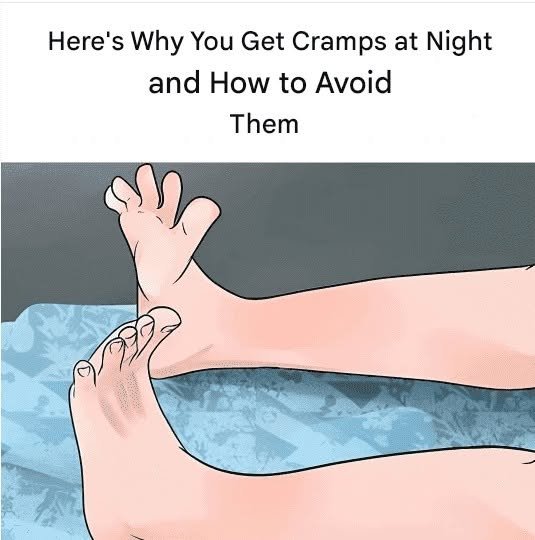
Waking up to a sudden, agonizing muscle spasm—most commonly locking up the calf, foot, or toes—is an intensely painful experience that can instantly ruin a good night’s sleep. While clickbait posts love to simplify nighttime cramps down to a single missing nutrient, medical science shows that nocturnal leg cramps are usually triggered by a combination of physical and neurological factors.
Here is what your body is actually experiencing when you get cramps at night, along with ways to find relief:
1. Muscle Fatigue and Overuse
-
What happens: If you spent the day standing for long hours, walking on hard surfaces, or engaging in unaccustomed exercise, your muscle fibers experience micro-fatigue.
-
Why it causes cramps: When fatigued muscles finally relax as you drift off to sleep, the neuromuscular junction can misfire, causing the muscle to contract involuntarily and lock into a painful spasm.
2. Electrolyte Imbalances and Dehydration
-
What happens: Your muscles rely on a delicate balance of minerals—specifically magnesium, calcium, potassium, and sodium—to contract and relax smoothly.
-
Why it causes cramps: If you are dehydrated, sweating heavily during the day, or lacking these vital electrolytes, your nerve endings become hyper-excitable. Without enough minerals to signal the muscle to release, it stays stuck in a contracted state.
3. Nerve Compression or Restricted Blood Flow
-
What happens: Poor circulation or minor nerve compression in the legs can occur depending on how you sleep or sit during the day.
-
Why it causes cramps: When blood flow or nerve signaling to the lower extremities is slightly compromised, the local muscle tissue lacks optimal oxygen and nutrient delivery, increasing the likelihood of sudden spasms.
4. Underlying Medical Conditions and Medications
-
What happens: Certain chronic conditions—such as peripheral artery disease, type 2 diabetes, kidney disease, or thyroid disorders—frequently list nocturnal cramps as a common symptom.
-
Why it causes cramps: Certain common medications, particularly diuretics (water pills) or statins, can alter electrolyte levels or muscle metabolism, triggering cramps as a side effect.
How to Stop a Cramp Fast (and Prevent It)
-
Stretch immediately: If a cramp strikes, gently straighten your leg and pull your toes upward toward your shin (dorsiflexion) to manually stretch the calf muscle.
-
Apply gentle heat or massage: Massaging the tightly knotted muscle or applying a warm compress can help the fibers relax.
-
Hydrate and balance minerals: Drink water consistently throughout the day and incorporate magnesium-rich foods (like leafy greens, nuts, seeds, and whole grains) into your diet after consulting a doctor.
When to see a doctor: If your nighttime cramps are frequent, severe, or accompanied by leg swelling, skin discoloration, or muscle weakness, schedule an evaluation to check your circulation, nerve health, or lab levels.
Are your nighttime cramps happening frequently, and do they usually affect your calves or your feet?