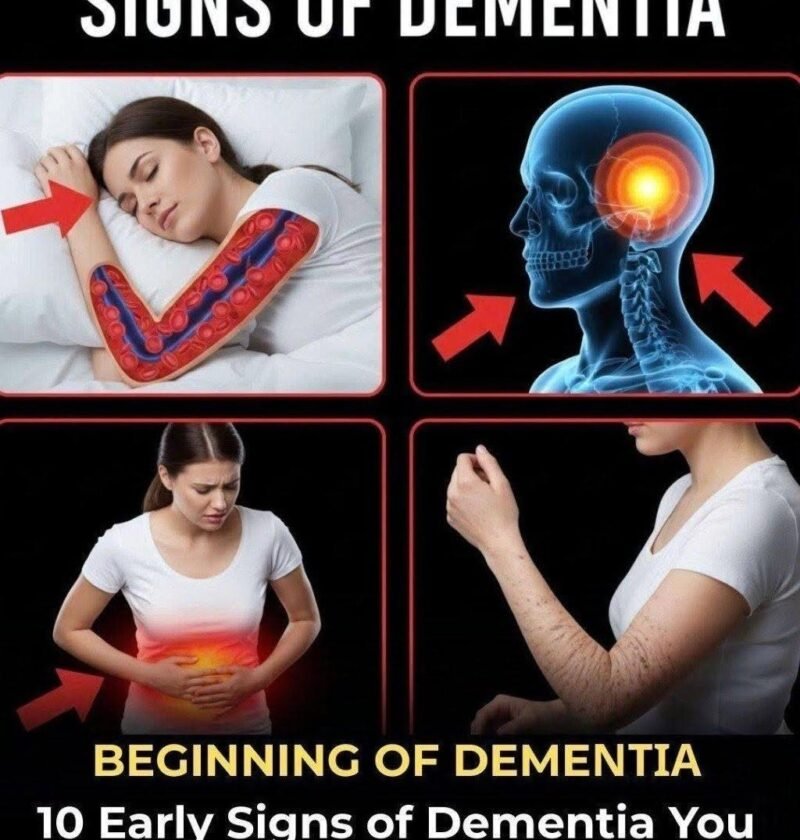
Headlines like *”10 Early Signs of Dementia You Should NEVER Ignore”* use fear-driven clickbait, but understanding the genuine early warning signs of cognitive decline is crucial for early detection and medical support. It is also important to remember that normal aging involves occasional forgetfulness, whereas true dementia involves persistent, progressive changes that interfere with daily life.
The 10 key early signs of dementia recognized by medical experts include:
* **Memory Loss That Disrupts Daily Life:** Forgetting recently learned information, important dates, or events, and repeatedly asking for the same information instead of just occasionally forgetting names or appointments.
* **Challenges in Planning or Solving Problems:** Experiencing noticeable difficulty developing a plan, working with numbers, following a familiar recipe, or keeping track of monthly bills.
* **Difficulty Completing Familiar Tasks:** Struggling with routine daily activities, such as driving to a familiar location, managing a budget at work, or remembering the rules of a favorite game.
* **Confusion with Time or Place:** Losing track of dates, seasons, and the passage of time, or forgetting where they are and how they got there.
* **Trouble Understanding Visual Images and Spatial Relations:** Having difficulty reading, judging distance, or determining color or contrast, which can affect driving and balance.
* **New Problems with Words in Speaking or Writing:** Struggling to follow or join a conversation, stopping mid-sentence with no idea how to continue, or repeatedly struggling to find the right vocabulary.
* **Misplacing Things and Losing the Ability to Retrace Steps:** Putting items in unusual places (such as a wallet in the refrigerator), losing things frequently, and being unable to retrace steps to find them.
* **Decreased or Poor Judgment:** Making uncharacteristic poor decisions, such as falling victim to financial scams, showing poor hygiene, or neglecting personal care.
* **Withdrawal from Work or Social Activities:** Pulling away from hobbies, social projects, work, or sports because of difficulty keeping up with what is happening.
* **Changes in Mood and Personality:** Becoming easily confused, suspicious, depressed, anxious, or fearful, and reacting with extreme agitation out of character.
> **When to consult a doctor:** Experiencing one or two of these signs occasionally is usually a normal part of aging (like misplacing keys). However, if these symptoms are persistent, worsening over time, and impacting daily independence, it is important to schedule a medical evaluation to rule out reversible causes (like vitamin deficiencies or thyroid issues) or get an accurate diagnosis.
Are you looking into these signs because you’ve noticed specific changes in yourself or a family member?