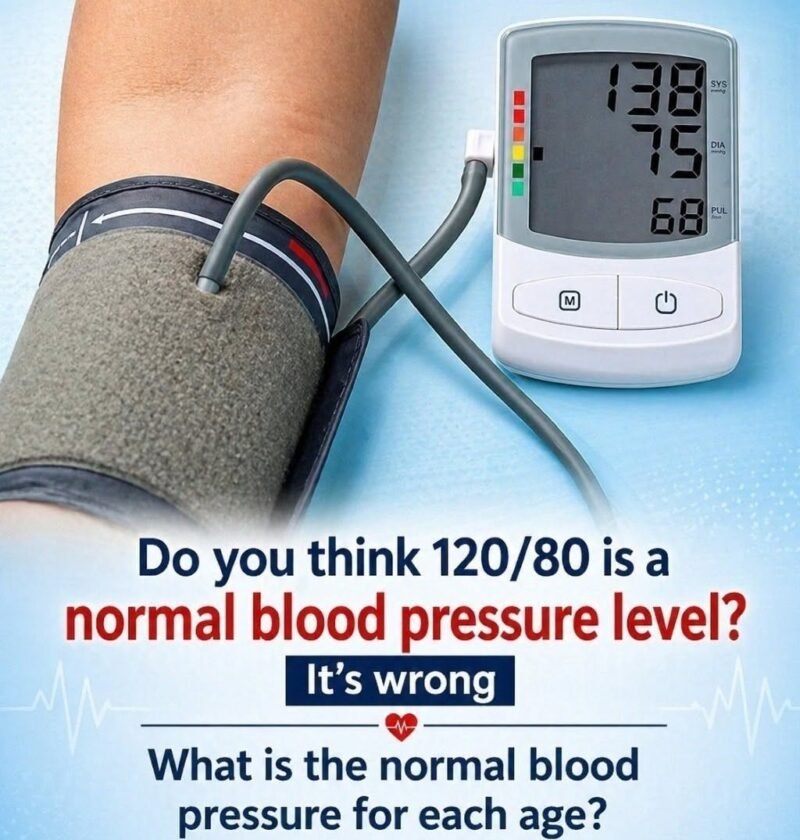
What Is Normal Blood Pressure at Different Ages?
A common misconception is that there is a different “normal” blood-pressure number for every age. For most adults, healthy blood pressure is generally below 120/80 mmHg regardless of age, although treatment targets can be individualized.
| Age | General guide |
|---|---|
| Children | Depends on age, sex, and height; adult ranges shouldn’t be used |
| 18–39 | Ideally <120/80 mmHg |
| 40–59 | Ideally <120/80 mmHg |
| 60+ | Ideally <120/80 mmHg, although individual treatment goals may differ |
Adult blood-pressure categories
-
Normal: Less than 120/80
-
Elevated: 120–129 systolic and less than 80 diastolic
-
High (Stage 1): 130–139 systolic or 80–89 diastolic
-
High (Stage 2): 140+ systolic or 90+ diastolic
-
Severely high: 180+ systolic and/or 120+ diastolic — particularly concerning when accompanied by symptoms
A single elevated reading doesn’t necessarily mean you have hypertension. Blood pressure can temporarily rise because of stress, exercise, caffeine, pain, or an incorrectly fitted cuff. Repeated measurements taken correctly provide a much better picture.
🚨 If your blood pressure is 180/120 or higher and you have chest pain, shortness of breath, severe headache, weakness, vision changes, confusion, or difficulty speaking, seek emergency medical care immediately.
If you tell me your age and blood-pressure reading, I can explain what that particular reading means.