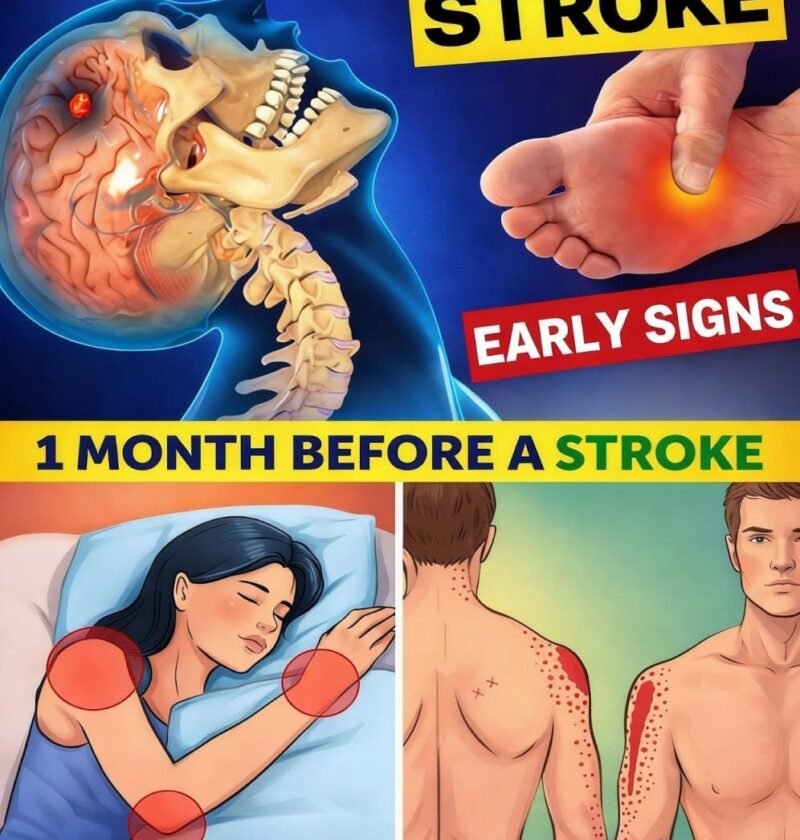
A useful correction to that headline: there usually aren’t reliable “warning signs” days or weeks before a stroke. The important exception is a transient ischemic attack (TIA), which causes sudden stroke-like symptoms that then resolve. A TIA is a medical emergency and should not be ignored. www.stroke.org+1
Warning symptoms to recognize
Sudden onset of any of these can indicate a stroke or TIA:
-
Facial drooping or numbness, especially on one side.
-
Weakness or numbness of an arm or leg, particularly on one side.
-
Slurred speech or difficulty speaking.
-
Difficulty understanding speech.
-
Sudden vision loss or double vision.
-
Sudden dizziness or loss of balance/coordination.
-
Sudden difficulty walking.
-
A sudden, severe headache without an obvious cause. CDC+1
Remember B.E. F.A.S.T.: Balance, Eyes, Face, Arm, Speech, Time. If these symptoms occur, seek emergency medical care immediately—even if they disappear. www.stroke.org
9 ways to lower stroke risk
-
Control high blood pressure—it’s one of the most important modifiable stroke risk factors.
-
Don’t smoke or vape.
-
Manage diabetes if you have it.
-
Check and manage cholesterol.
-
Be physically active regularly.
-
Maintain a healthy weight.
-
Eat a heart-healthy diet, including plenty of vegetables and fruit and limiting excess sodium and saturated/trans fats.
-
Limit alcohol.
-
Take prescribed medications consistently, particularly medicines for conditions such as hypertension, diabetes, high cholesterol, or atrial fibrillation. CDC+2
If you’ve already experienced a possible TIA—even if the symptoms lasted only a few minutes—don’t wait for another episode. Urgent assessment can identify causes and help reduce the risk of a subsequent stroke. www.stroke.org