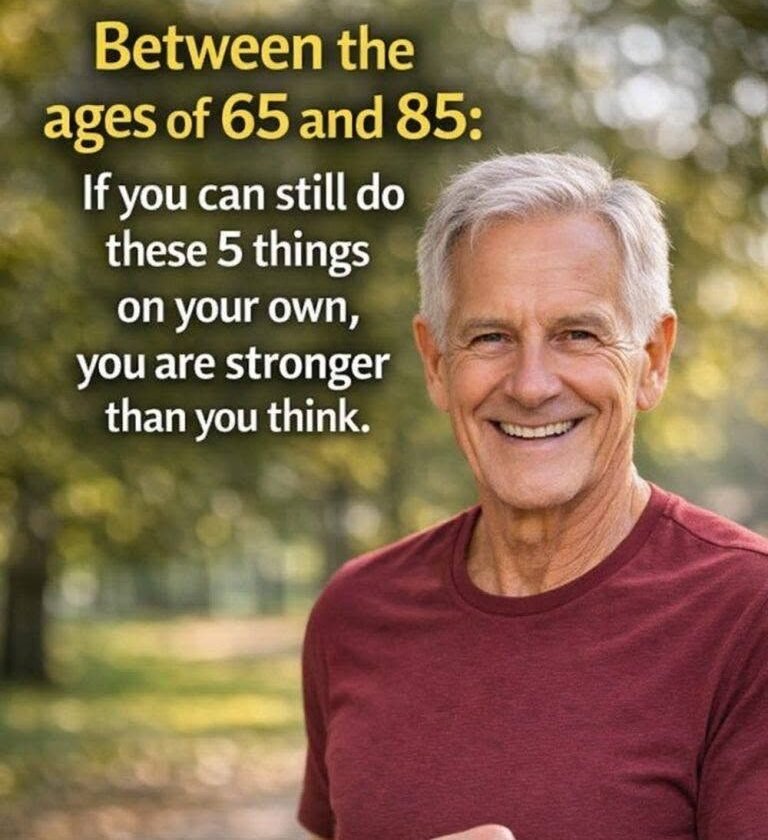
That headline is more about functional independence than a medical test. Being able to do everyday activities independently is a useful indication of strength, mobility, balance, and overall physical function—but there isn’t a scientifically established “5 things” checklist that proves someone is healthier than
their peers.
5 useful signs of physical independence
-
Get up from a chair without using your hands
This requires leg and hip strength and is closely related to functional mobility. -
Walk steadily for several minutes
Being able to walk independently without excessive fatigue or needing support is a positive sign of endurance and mobility. -
Climb a flight of stairs
Managing stairs independently requires a combination of leg strength, balance, and cardiovascular fitness. -
Get dressed and put on shoes independently
This involves flexibility, balance, coordination, and the ability to perform everyday tasks. -
Carry ordinary household items safely
Being able to carry groceries, laundry, or other light-to-moderate objects indicates useful upper- and lower-body strength.
A better way to think about aging
At 65–85, maintaining or improving function matters more than comparing yourself with a particular age group. Regular strength training, walking/aerobic activity, balance exercises, and adequate nutrition can help preserve independence.
And don’t use these tasks as a challenge if you have significant balance problems or a history of falls—fall prevention is more important than proving strength.