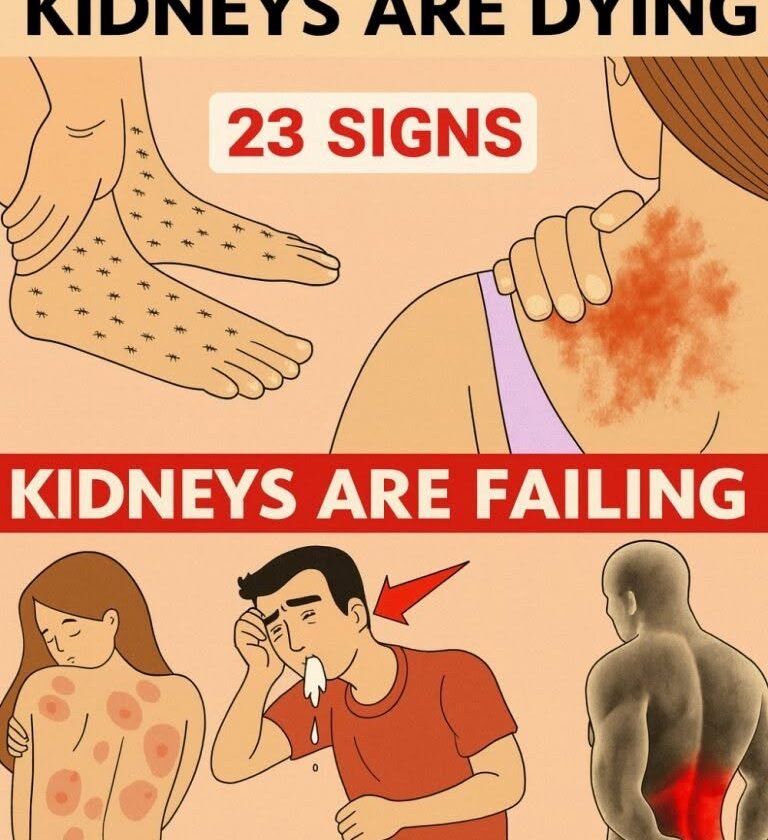
The headline “23 strange signs your kidneys might be in trouble” needs an important correction: early chronic kidney disease often causes no noticeable symptoms, so a long symptom list can give false reassurance or unnecessary fear. Blood and urine testing are often the only way to detect it early.
Possible signs that deserve medical attention
Some symptoms associated with kidney disease—particularly as it becomes more advanced—include:
- Foamy or persistently bubbly urine
- Blood or pink/dark-colored urine
- Urinating much more or less than usual
- Frequently waking at night to urinate
- Swelling of the feet, ankles, legs, hands, or face
- Puffiness around the eyes, especially in the morning
- Persistent tiredness or weakness
- Trouble concentrating or thinking clearly
- Poor appetite
- Nausea or vomiting
- Unexplained weight loss
- Dry or persistently itchy skin
- Muscle cramps
- Numbness or tingling
- Sleep problems
- Shortness of breath
- Headaches
- Changes in taste, including a metallic or unpleasant taste
- Increased or worsening blood pressure
- Feeling unusually thirsty
- Reduced urine output
- Generalized swelling or fluid retention
- Confusion, particularly in severe kidney dysfunction.
But none of these signs proves that your kidneys are failing. Many have other possible causes. Conversely, someone can have significant kidney disease without having any of them.
The most useful thing to do
If you have diabetes, high blood pressure, heart disease, or a family history of kidney failure, ask a healthcare professional about kidney screening. Common screening includes a blood test to estimate kidney filtration (eGFR) and a urine test for albumin/protein (uACR).