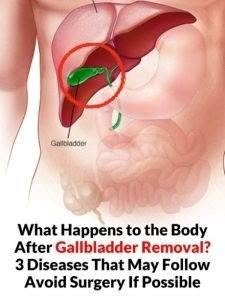
The headline “3 diseases may follow gallbladder removal—avoid surgery if possible” is misleading. Gallbladder removal (cholecystectomy) is generally considered a common and safe operation, and for people with symptomatic or complicated gallstones, avoiding appropriate surgery can sometimes be more dangerous than having it. NIDDK+1
What happens after the gallbladder is removed?
The gallbladder stores bile made by the liver. After removal, the liver continues producing bile, but bile flows more continuously into the intestine rather than being stored in the gallbladder. Most people can digest food normally and live a normal life without a gallbladder. NIDDK+1
Some people temporarily experience:
- Softer or more frequent stools
- Diarrhea
- Bloating or indigestion
- Abdominal discomfort
- Nausea
These symptoms often improve after surgery. Persistent diarrhea can occur in some people and may sometimes be related to increased bile acids reaching the colon. nhs.uk+1
What “3 diseases” might the headline be referring to?
There is no established set of three diseases that gallbladder removal causes. Surgery does have potential complications, but serious complications are uncommon.
Recognized complications include:
What “3 diseases” might the headline be referring to?
- Bile-duct injury or bile leakage — uncommon but potentially serious.
- Infection or bleeding — possible with any operation.
- Blood clots (DVT/PE) — a recognized surgical risk, although preventive measures are used. nhs.uk+1
These are complications of surgery, not diseases that inevitably develop because you no longer have a gallbladder.
Should you avoid surgery?
Not simply because you’re worried about life without a gallbladder.
People with silent gallstones that aren’t causing symptoms often don’t need treatment. But recurrent gallbladder attacks, inflammation, bile-duct blockage, jaundice, or gallstone-related pancreatitis may require treatment, and surgery is commonly the definitive treatment. NIDDK+1
Trying to “dissolve” or flush out gallstones with home remedies is not a safe substitute for medical assessment.
Seek urgent medical care for severe or persistent upper-abdominal pain, fever/chills, repeated vomiting, yellow skin or eyes, dark urine, or pale stools, as these can indicate a serious gallstone complication. NIDDK