If You Think You’re Having a Heart Attack at Home, Do This Immediately
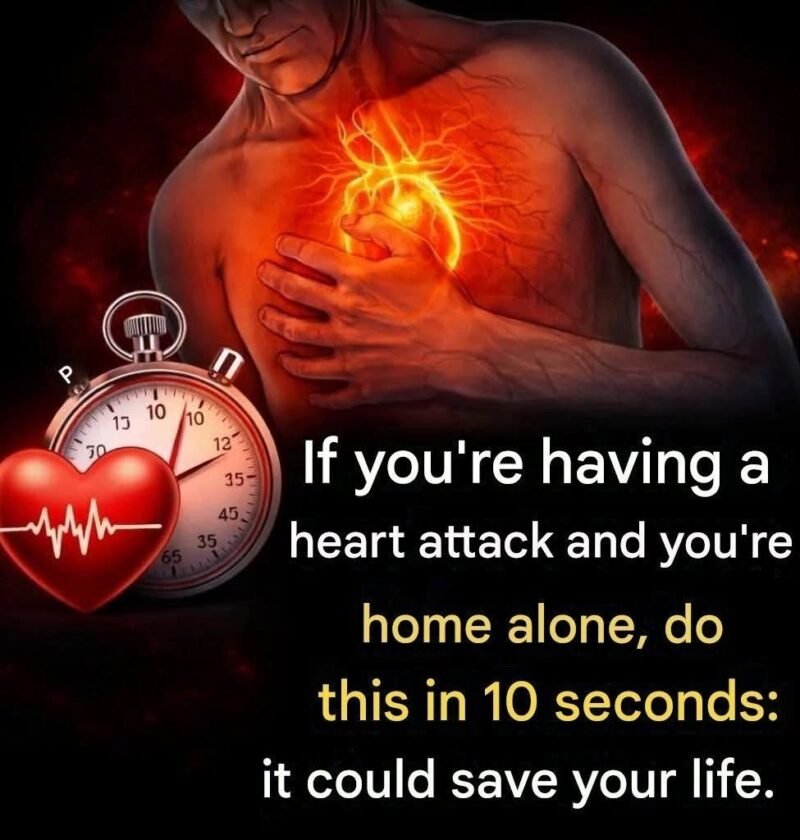
Forget the viral “10-second cure.”
There is no trick that can stop a heart attack at home. The most important thing you can do is get emergency medical help as quickly as possible.
🚨 Step 1: Call emergency services
If you have symptoms such as:
- Pressure, squeezing, or pain in the chest
- Pain spreading to the arm, back, neck, jaw, or stomach
- Shortness of breath
- Cold sweating
- Nausea
- Lightheadedness or unusual weakness
Call your local emergency number immediately. Don’t wait to see whether the symptoms disappear.
Emergency medical services can begin treatment on the way to the hospital, and using EMS rather than driving yourself can reduce treatment delays.
🪑 Step 2: Stop what you’re doing and rest
Sit somewhere safe and comfortable while waiting for help. Avoid exerting yourself or driving yourself to the hospital.
💊 Step 3: Ask about aspirin
For an alert adult with suspected non-traumatic heart-attack symptoms, first-aid guidance allows 162–325 mg of aspirin to be chewed and swallowed while waiting for EMS, provided there is no known aspirin allergy and no medical advice against taking it.
If you’re uncertain whether aspirin is appropriate, it’s reasonable to wait for emergency professionals rather than taking it. Do not delay the emergency call to take aspirin.
❤️ What if the person collapses?
A heart attack and cardiac arrest are not the same thing. If the person becomes unresponsive and is not breathing normally or is only gasping, assume cardiac arrest.
Call emergency services, begin CPR with hard, fast chest compressions in the center of the chest, and use an AED as soon as one is available.
⏱️ Remember: Minutes matter
The safest “10-second trick” is simply: