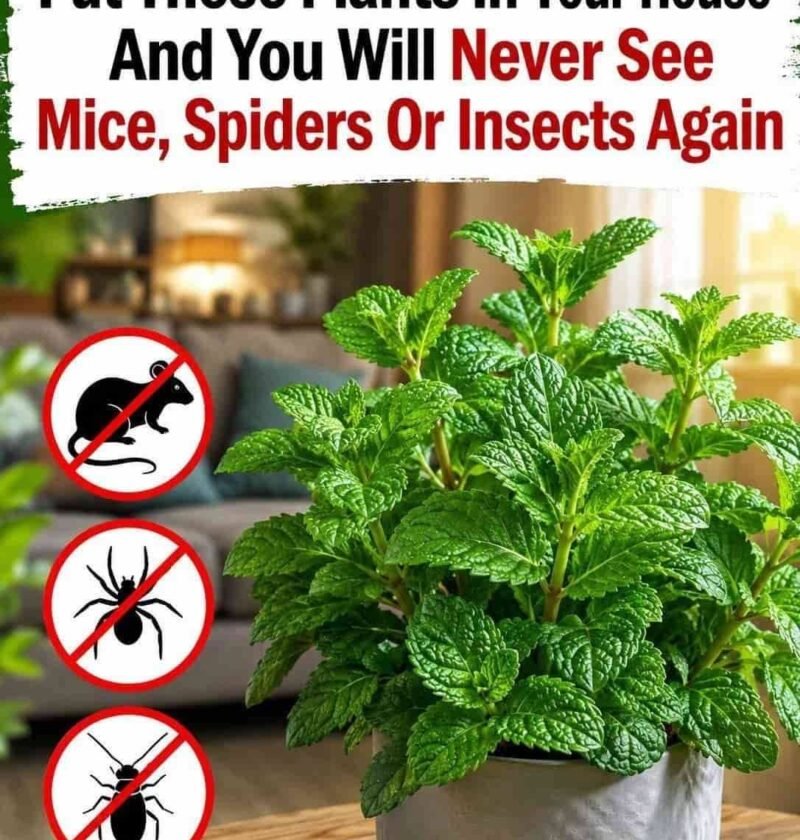
🌿 8 Plants That May Help Repel Mice, Spiders & Other Insects
Certain strongly scented plants contain natural compounds that may discourage some insects or rodents from areas where they’re planted or placed. However, plants alone usually won’t eliminate an established infestation.
1. 🌱 Peppermint
Its strong menthol scent is commonly used as a natural pest deterrent. Grow it in containers because it can spread aggressively.
2. 🌿 Lavender
Lavender’s fragrance is pleasant to people but may discourage some insects. Place pots near sunny windows, doors, or patios.
3. 🌱 Rosemary
This aromatic herb can help make outdoor areas less attractive to certain insects. It also works well as a culinary herb.
4. 🌿 Basil
Basil has a strong aroma and is easy to grow near sunny windows or outdoor seating areas.
5. 🌱 Lemongrass
Its citrus scent comes partly from compounds related to citronella. It can be useful around outdoor spaces, although simply growing the plant isn’t equivalent to using a tested mosquito repellent.
6. 🌿 Mint
Different mint varieties have strong fragrances that some insects may avoid. Again, keep it in containers to prevent it from taking over your garden.
7. 🌼 Marigolds
Marigolds are often promoted as natural insect repellents. Their effectiveness varies, but they’re attractive, easy to grow, and useful as companion plants.
8. 🌿 Catnip
Catnip contains nepetalactone, a compound that has demonstrated insect-repellent properties in research. Its effectiveness in an ordinary garden depends on how it’s used and the pest involved.
🐭 What about mice and spiders?
This is where viral gardening claims often go too far.
A pot of peppermint or another fragrant plant isn’t a reliable way to remove mice or spiders from a home. For mice, the most effective measures are sealing holes and gaps, removing accessible food, and using appropriate pest-control methods.
For spiders, reducing insects—their food source—and sealing entry points can be more effective than relying on plants.
🏡 The best natural strategy
Use fragrant plants as one part of prevention, while also:
- Sealing cracks and openings around doors, windows, pipes, and foundations
- Keeping food in sealed containers
- Cleaning crumbs and food spills promptly
- Reducing standing water and excessive outdoor clutter
- Keeping vegetation trimmed away from the house
Bottom line: These plants can make your garden more pleasant and may discourage some pests, but there is no plant that reliably “repels all mice, spiders, and insects.” For an established infestation, targeted pest control is much more dependable.