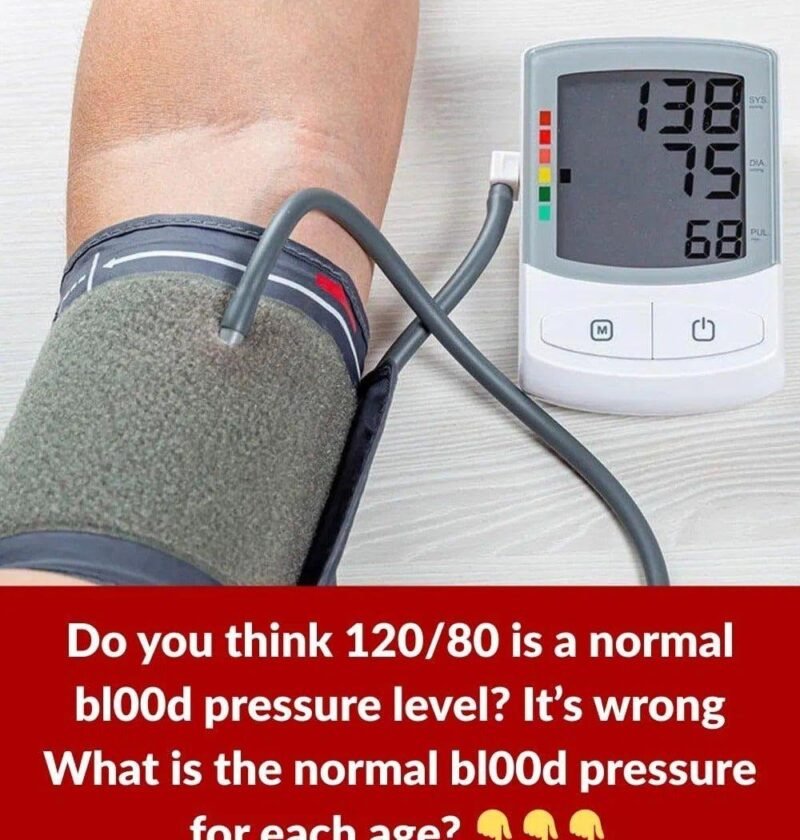
What Is Normal Blood Pressure at Different Ages?
A common misconception is that normal blood pressure has a different target for every decade of life. In adults, there isn’t a simple chart where higher numbers automatically become “normal” as you get older.
For most adults, normal blood pressure is below 120/80 mmHg. The first number is systolic pressure (when the heart contracts), and the second is diastolic pressure (when the heart relaxes).
| Age | General guide for adults |
|---|---|
| 18–39 | <120/80 mmHg |
| 40–59 | <120/80 mmHg |
| 60–79 | <120/80 mmHg |
| 80+ | Individual targets may differ depending on health and treatment |
What the numbers mean
- Normal: <120 systolic and <80 diastolic
- Elevated: 120–129 systolic and <80 diastolic
- High blood pressure, stage 1: 130–139 systolic or 80–89 diastolic
- High blood pressure, stage 2: ≥140 systolic or ≥90 diastolic
A single high reading doesn’t necessarily mean you have hypertension. Blood pressure varies with stress, activity, caffeine, pain, medications, and even how you measure it.
What about people over 65?
Older adults often have higher blood pressure, but that doesn’t mean high blood pressure is harmless or should simply be accepted as “normal aging.” Treatment goals should be individualized, particularly for people who are frail, have multiple medical conditions, or are prone to falls or dizziness.
For an accurate home reading, sit quietly for about 5 minutes, keep your back supported and feet flat on the floor, rest your arm at heart level, and take two readings about a minute apart.
🚨 Seek urgent medical care if your blood pressure is 180/120 mmHg or higher and you have symptoms such as chest pain, shortness of breath, severe headache, weakness/numbness, confusion, or vision changes.