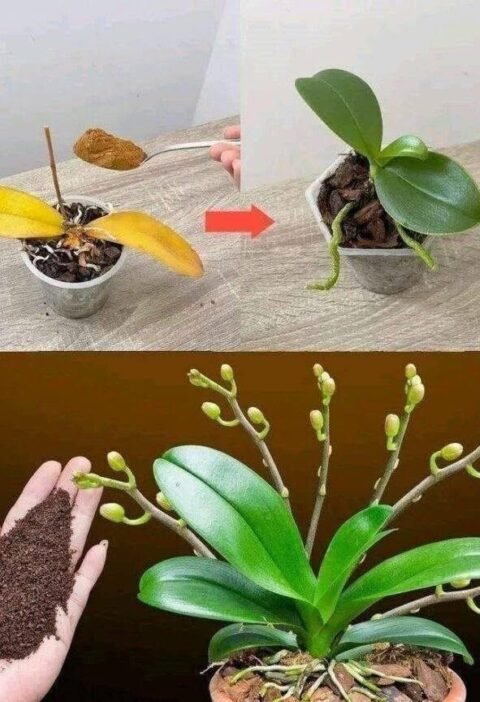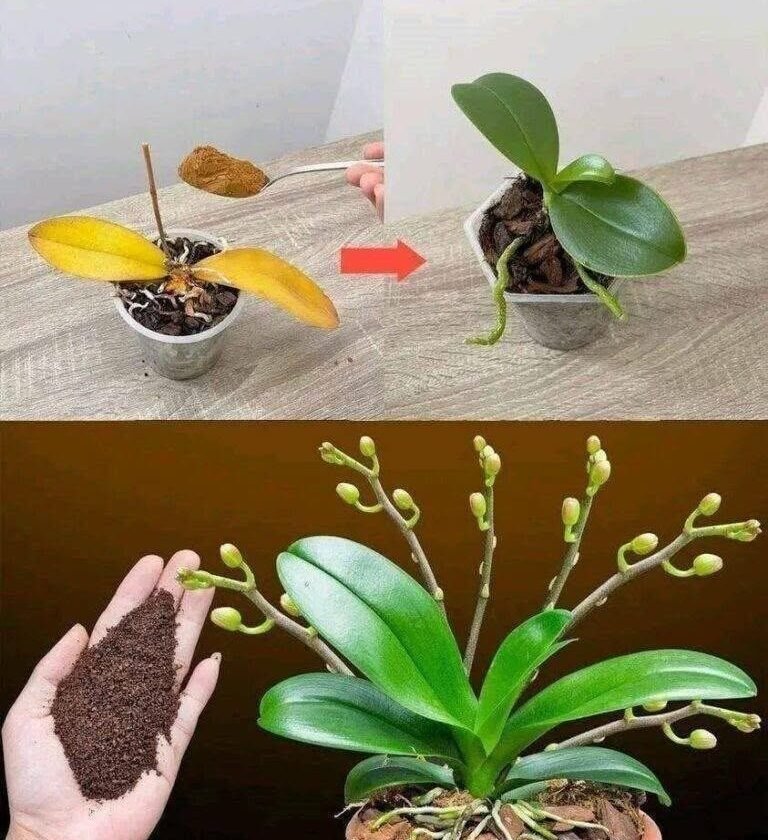
🌸 “Just One Teaspoon” to Make an Orchid Bloom? Here’s What Actually Works
You may have seen the viral gardening claim that one teaspoon of a household ingredient can suddenly make an orchid produce lots of flowers. Unfortunately, there is no magic ingredient that reliably triggers spectacular blooming overnight.
For a healthy orchid, especially a Phalaenopsis, flowering is influenced mainly by light, temperature, watering, nutrition, and the plant’s natural growth cycle.
1. Give it enough bright, indirect light ☀️
An orchid with beautiful green leaves but no flowers may simply not be receiving enough light. Place it somewhere bright with filtered light, avoiding intense direct midday sun that can scorch the leaves.
2. Water correctly 💧
Don’t keep the roots constantly wet. Water thoroughly when the growing medium is approaching dryness, then allow excess water to drain.
Never leave the pot standing in water, and avoid allowing water to remain trapped in the crown between the leaves.
3. Feed it—but don’t overfeed 🌱
Use a commercial orchid fertilizer according to its label. A properly diluted, balanced fertilizer can provide nutrients needed for healthy growth.
Adding extra fertilizer, sugar, baking soda, coffee, or other kitchen ingredients isn’t a shortcut to more flowers and may damage the plant if used incorrectly.
4. Pay attention to temperature
For many Phalaenopsis orchids, a modest difference between daytime and nighttime temperatures can help signal that it’s time to produce a flower spike. Avoid extreme temperatures and cold drafts.
5. Check the roots
Healthy roots are essential for flowering. If the potting medium remains wet for a long time or the roots are mushy, brown, or rotting, address the root problem before trying to stimulate blooms.
🌺 What about the famous “one teaspoon” trick?
You may encounter recommendations for cinnamon, rice water, banana water, sugar, milk, or other homemade mixtures. Some of these ingredients have legitimate uses in gardening, but there is no scientifically established teaspoon-sized recipe that makes orchids suddenly burst into flowers.
The most reliable “secret” is much less exciting:
Good light + correct watering + healthy roots + appropriate fertilizer + suitable temperatures = better chances of flowering.
And if your orchid already has plenty of healthy leaves, that’s actually encouraging. With the right conditions, it may simply need time to enter its natural flowering cycle.