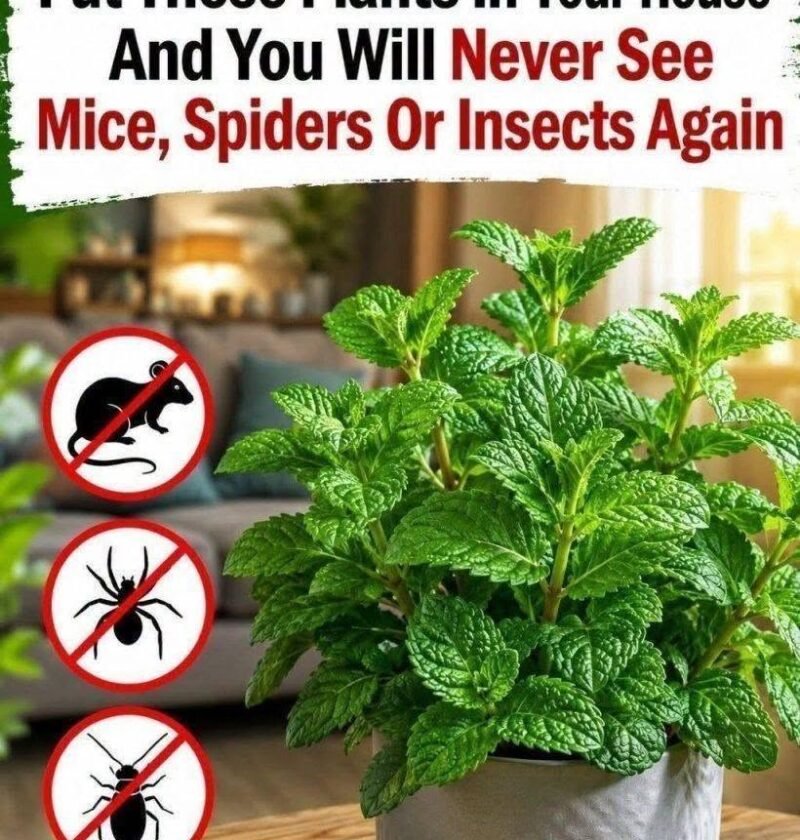
Some plants have scents or compounds that may discourage certain insects, but claims that they reliably “repel mice, spiders, and all insects” are often exaggerated. Plants generally work best as one part of a broader pest-control approach.
Eight commonly suggested choices are:
-
Mint — its strong aroma may deter some insects; keep it in a pot because it spreads aggressively.
-
Lavender — aromatic and attractive to people, while its scent may discourage some insects.
-
Basil — can help around outdoor sitting areas and is useful as a culinary herb.
-
Rosemary — its strong fragrance may discourage some insects, especially around patios.
-
Lemongrass — contains citronella-related compounds and is often used around outdoor areas.
-
Marigolds — may help with some garden pests, although their pest-repelling reputation is often overstated.
-
Catnip — contains nepetalactone, a compound that has demonstrated insect-repellent activity.
-
Sage — its aromatic oils may discourage some insects, particularly when the leaves are crushed or burned outdoors.
What about mice and spiders?
This is where viral gardening lists often go too far. Planting mint or lavender isn’t a dependable way to eliminate mice or spiders. For mice, sealing holes and gaps, removing accessible food, and reducing hiding places are much more effective. For spiders, reducing insects (their food source) and sealing entry points generally works better than relying on plants.
Also be careful with essential oils around pets, particularly cats and dogs, because concentrated oils can be toxic.
If you tell me whether your main problem is mice, spiders, mosquitoes, cockroaches, or ants, I can give you the most effective plant-based options for that particular pest.