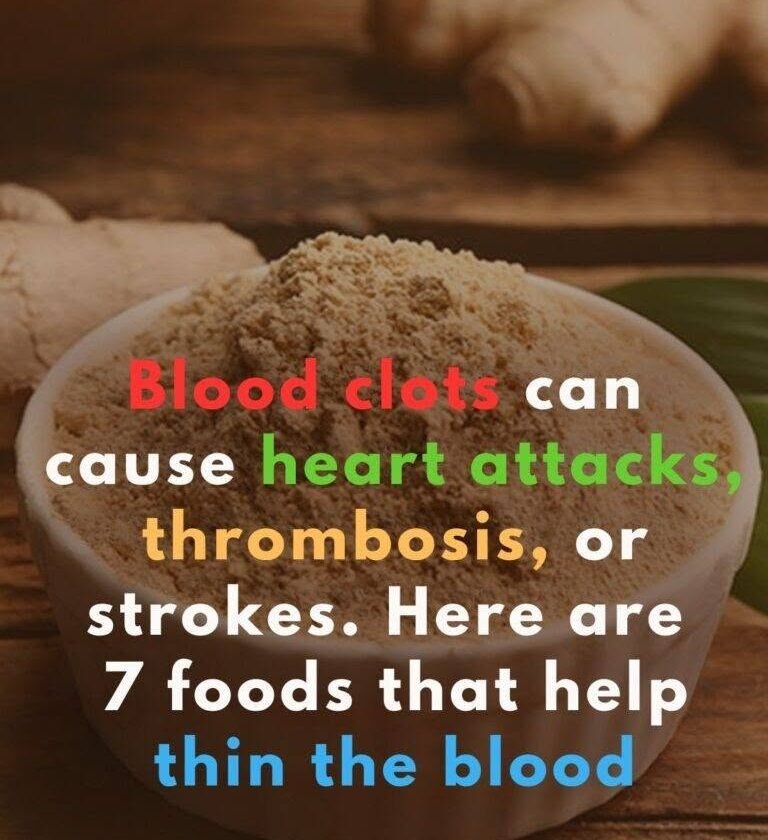
🩸 7 “Blood-Thinning” Foods You Should Know About
The phrase “blood-thinning foods” can be misleading. Foods don’t work like prescription anticoagulants, and you shouldn’t use food to treat or prevent a blood clot. Some foods and supplements can, however, influence platelet function or the effect of anticoagulant medicines.
7 foods commonly discussed
- Garlic 🧄 — may have effects on platelet activity, particularly in concentrated supplement forms.
- Ginger — has been studied for effects on platelet aggregation, but it isn’t a substitute for an anticoagulant.
- Turmeric — contains curcumin, which has been investigated for effects on clotting and inflammation.
- Fatty fish 🐟 — provides omega-3 fatty acids, which have effects on platelet function and cardiovascular health.
- Cranberries — sometimes discussed in relation to warfarin, although the evidence on clinically important interaction is mixed.
- Green tea 🍵 — contains vitamin K and can therefore be relevant to people taking warfarin.
- Leafy green vegetables 🥬 — spinach, kale, collards and similar vegetables are high in vitamin K, which is important for blood clotting. (Office of Dietary Supplements)
⚠️ Especially important if you take warfarin
If you’re taking warfarin, don’t suddenly start eating large amounts of leafy greens or suddenly stop eating them. Vitamin K can reduce warfarin’s effect, so the important principle is to keep your vitamin-K intake reasonably consistent from day to day. (Office of Dietary Supplements)
This is different from most newer anticoagulants, such as apixaban, dabigatran, edoxaban and rivaroxaban, which aren’t affected by vitamin K in the same way. (nhs.uk)
Bottom line: There is no food that safely “thins your blood” enough to replace prescribed medication. If you’re taking an anticoagulant, check with your doctor or pharmacist before making major dietary changes or taking concentrated garlic, ginger, turmeric, fish-oil or herbal supplements.