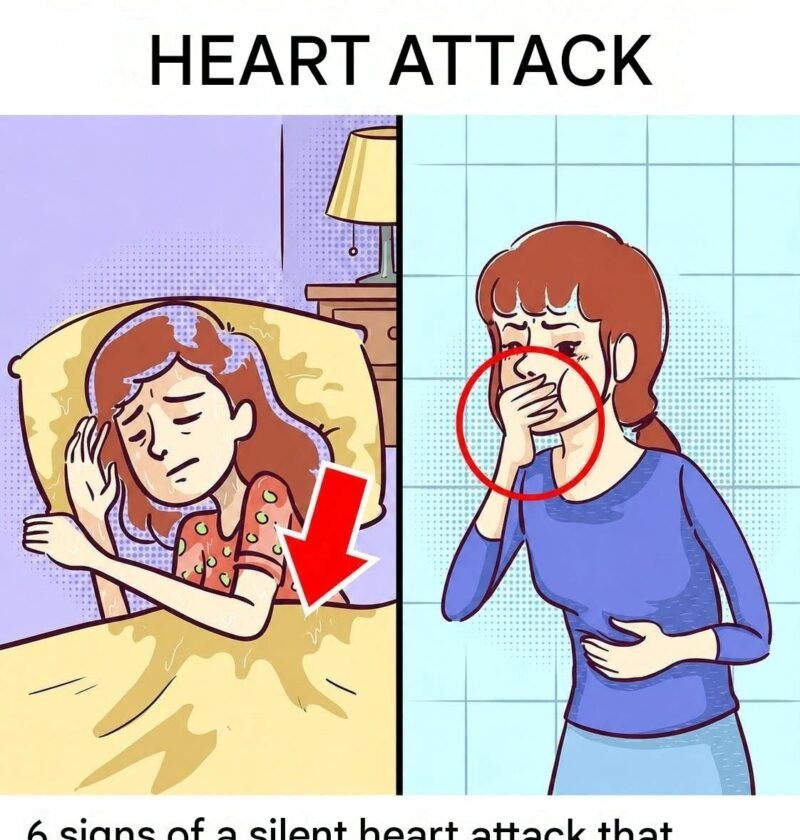
When people think of a heart attack, they usually picture the dramatic Hollywood scenario: sudden, crushing chest pain, clutching the left arm, and collapsing. However, a silent heart attack (medically known as a silent myocardial infarction) occurs with symptoms so mild, atypical, or brief that they are completely misunderstood or ignored.
Because the heart muscle still gets deprived of oxygen and suffers injury, recognizing these subtle cues is critical. Six frequently overlooked signs include:
1. Unexplained, Crushing Fatigue
-
What it feels like: A profound, sudden exhaustion that makes everyday tasks—like carrying groceries, walking up a single flight of stairs, or even getting out of bed—feel like running a marathon. It often hits abruptly and lingers for days.
-
Why it’s overlooked: People write it off as a bad night of sleep, a stressful work week, burnout, or “just getting older.”
2. Vague Chest “Discomfort” (Instead of Pain)
-
What it feels like: A silent heart attack rarely causes sharp pain. Instead, patients describe a mild pressure, a feeling of fullness, a dull ache, or a sensation like a heavy weight or tight band resting across the center of the chest. It may last a few minutes, vanish, and then return later.
-
Why it’s overlooked: Because it doesn’t hurt sharply, people brush it off as muscle strain from the gym, poor posture, or anxiety.
3. Upper Body Aches (Jaw, Neck, Upper Back, or Arms)
-
What it feels like: A dull, persistent ache or tightness that radiates outside the chest—often settling in the lower jaw, teeth, neck, one or both arms, or between the shoulder blades.
-
Why it’s overlooked: Because cardiac nerves share pathways with other upper-body regions, people mistake jaw pain for a dental issue or temporomandibular joint (TMJ) discomfort, back pain for a strained muscle, and arm aches for arthritis or tendonitis.
4. Sudden Shortness of Breath (Without Exertion)
-
What it feels like: Finding yourself unexpectedly winded while doing very little—such as folding laundry, sitting at a desk, or walking a short distance—feeling as though you cannot take a deep or satisfying breath.
-
Why it’s overlooked: It is frequently blamed on being “out of shape,” seasonal allergies, mild asthma, or normal aging.
5. Persistent Indigestion, Nausea, or Bloating
-
What it feels like: A sudden onset of mild upper abdominal discomfort, sour stomach, burping, or queeziness that mimics a bad meal or acid reflux.
-
Why it’s overlooked: Digestive issues are exceptionally common, so people naturally assume they ate something spicy, are experiencing a flare-up of GERD, or have a mild bug. (This symptom is particularly common in women).
6. Sudden Lightheadedness or Cold Sweats
-
What it feels like: A brief wave of dizziness, wooziness, or breaking out into a cold, clammy sweat for no apparent reason while resting.
-
Why it’s overlooked: It is easily attributed to standing up too fast, dehydration, skipping a meal, or a passing anxiety spike.
💡 Who is most at risk? Silent heart attacks are disproportionately common in women, older adults, and individuals with diabetes (whose nerve damage from neuropathy can dull pain signals). If you or someone nearby experiences a sudden combination of these subtle signs—especially if they don’t resolve with rest—it warrants an immediate medical evaluation or a call to emergency services.