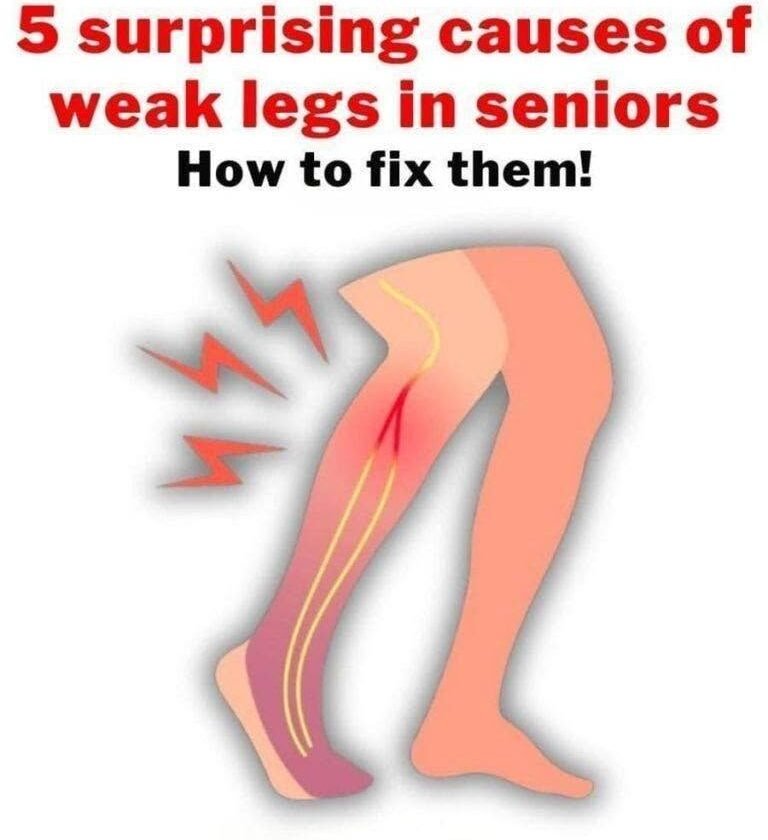
5 Surprising Causes of Weak Legs in Seniors — and What Can Help
Weak legs are not simply an unavoidable part of aging. Sometimes the cause is straightforward, such as loss of muscle from inactivity; other times, weakness can be a sign of a medication problem, nutritional deficiency, nerve disorder, or another medical condition.
1. 💪 Loss of muscle from inactivity
Sarcopenia—age-related loss of muscle mass and strength—can make it harder to stand from a chair, climb stairs, or walk. Lack of exercise and poor nutrition can accelerate it.
What helps: Progressive resistance exercise—such as chair stands, resistance bands, light weights, and appropriately challenging squats—can help maintain and build strength. Start gradually and use support if balance is poor.
2. 💊 Medication side effects
Older adults are more likely to take several medications, and some medicines can contribute to dizziness, weakness, low blood pressure, or balance problems.
What helps: Ask your doctor or pharmacist to review all prescription medicines, OTC drugs and supplements. Don’t stop a prescription medication yourself.
3. 🩸 Nutritional deficiencies
Inadequate nutrition can contribute to weakness. Deficiencies of certain vitamins and minerals—including vitamin B12, vitamin D, iron and others—may need to be considered depending on the person’s diet and symptoms. Older adults don’t necessarily need supplements, however; testing can help determine whether a deficiency actually exists.
What helps: Eat adequate protein and a varied diet. If weakness persists, a clinician can determine whether blood tests are appropriate.
4. 🧠 Nerve or balance problems
Diabetes, nerve disorders, vision problems and conditions affecting the inner ear can interfere with balance and walking.
What helps: Treating the underlying condition and working with a physical therapist on strength, gait and balance exercises can improve mobility and reduce fall risk.
5. 🩺 An underlying illness
Weakness can sometimes accompany conditions involving the thyroid, heart, kidneys, nerves, blood vessels or other systems. Certain neurological and muscle diseases can also cause progressively worsening leg weakness.
What helps: Don’t try to treat unexplained weakness with vitamins or supplements alone. Finding and treating the underlying cause is the important step.
🚨 When weakness needs urgent attention
Sudden weakness, particularly on one side of the body or accompanied by facial drooping, speech difficulty, confusion, or trouble walking, can indicate a stroke and requires emergency medical attention.
Progressively worsening weakness, repeated falls, new difficulty walking, or weakness that doesn’t have an obvious explanation also deserves medical evaluation.