A mini-stroke—medically known as a Transient Ischemic Attack (TIA)—occurs when blood flow to a part of the brain is briefly blocked. Unlike a major stroke, the blockage is temporary and typically leaves no permanent damage. However, a TIA is a critical warning sign—often called a “warning stroke”—because up to a third of people who have a TIA go on to experience a major stroke, frequently within days or months.
In seniors, the symptoms of a TIA can sometimes be subtle or mistakenly dismissed as normal signs of aging, fatigue, or joint stiffness.
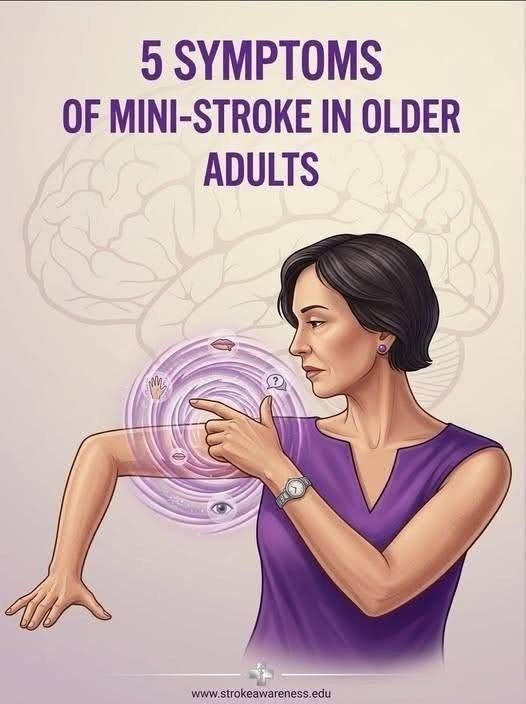
5 Important Symptoms of a Mini-Stroke in Seniors
-
Sudden, Transient Weakness or Numbness: A sudden loss of strength or feeling, typically affecting just one side of the body. A senior might suddenly drop an object from one hand, find that one leg feels heavy or unresponsive, or experience a drooping corner of the mouth.
-
Sudden Speech Difficulties or Confusion: Trouble speaking clearly, slurred speech, or a sudden inability to find the right words or understand what others are saying. In seniors, this is sometimes brushed off as “senior moments,” but a sudden onset is a neurological red flag.
-
Sudden Vision Changes in One or Both Eyes: A brief blackout, blurring, double vision, or a shadow passing across the field of vision in one or both eyes. This can happen when blood flow to the visual processing centers of the brain is temporarily interrupted.
-
Sudden Loss of Balance, Dizziness, or Vertigo: Unexplained unsteadiness, a sudden feeling of the room spinning, or difficulty walking that cannot be explained by inner-ear issues or joint pain. In older adults, this can easily lead to dangerous falls.
-
Sudden, Unexplained “Thunderclap” Headache: A severe, abrupt headache with no known cause, often accompanied by dizziness or altered mental awareness.
Why Timing Matters (Even If Symptoms Disappear)
One of the most dangerous misconceptions about a TIA is that because the symptoms went away, the danger has passed.
-
Temporary Does Not Mean Harmless: TIAs usually last only a few minutes to an hour and resolve completely, but they are a neurological emergency.
-
A Crucial Window: Seeking medical evaluation immediately after a TIA allows doctors to run diagnostic imaging (like an MRI or CT scan) and check for underlying issues—such as carotid artery blockages, irregular heart rhythms (like atrial fibrillation), or high blood pressure—so they can implement life-saving preventative treatments.
CRITICAL EMERGENCY DIRECTIVE:If a senior experiences any of these symptoms—even if they resolve within minutes—call emergency services immediately or get them to the nearest emergency room for evaluation. Never wait to see if a neurological symptom comes back.
Are you looking into this because you or an older loved one recently experienced sudden symptoms, or are you gathering general health and safety information?