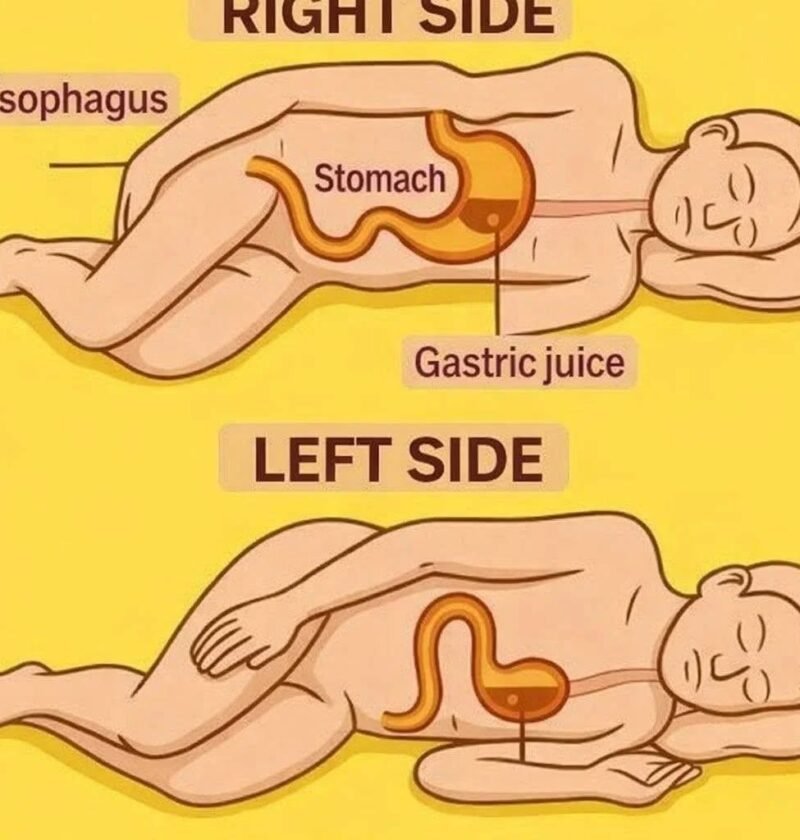
While most people focus heavily on how many hours they sleep, the position in which you sleep plays a surprisingly powerful role in your overall health, digestion, brain function, and spinal alignment. Different sleep postures place unique demands on your body, and adjusting how you lie at night can make a noticeable difference in how you feel each day.
The Pros and Cons of Common Sleeping Positions
-
Sleeping on Your Side (Particularly the Left Side):
-
The Benefits: Left-side sleeping is widely considered one of the healthiest positions for digestion and circulation. Because of stomach anatomy, sleeping on your left side helps keep stomach acid below the esophagus, making it a fantastic choice for people with acid reflux or GERD. It also improves blood flow to the heart and is the recommended position during pregnancy.
-
Potential Downsides: It can sometimes place pressure on the shoulder and hip joints, leading to soreness if you lack a supportive mattress.
-
-
Sleeping on Your Back (Supine):
-
The Benefits: Sleeping flat on your back distributes your body weight evenly across the mattress, minimizing pressure points and keeping your spine, neck, and head in a neutral alignment. It also prevents facial wrinkles caused by pressing your face into a pillow.
-
Potential Downsides: Back sleeping is notorious for worsening snoring and obstructive sleep apnea because gravity causes the base of the tongue and soft palate to collapse against the back of the throat. It can also trigger or aggravate acid reflux symptoms.
-
-
Sleeping on Your Stomach:
-
The Benefits: This position can occasionally reduce snoring compared to sleeping flat on your back.
-
Potential Downsides: Stomach sleeping is generally considered the hardest on the body. To breathe, you must turn your head sharply to one side for hours, twisting your cervical spine and straining your neck muscles. It also flattens the natural curve of your lower back, frequently leading to morning stiffness and lower back pain.
-
Simple Tweaks to Optimize Your Sleeping Posture
You don’t necessarily have to overhaul your natural sleeping habits overnight, but small adjustments with pillows can drastically improve your spinal support:
-
If You Sleep on Your Back: Place a small pillow or rolled towel underneath your knees. This helps maintain the natural curve of your lower back and relieves tension on your lumbar spine.
-
If You Sleep on Your Side: Place a firm pillow between your knees. This keeps your hips stacked, prevents your top leg from pulling your spine out of alignment, and relieves pressure on your lower back and hips.
-
Support Your Neck: Choose a pillow that fills the gap between your mattress and your neck, keeping your head level with your spine rather than propped up at an extreme angle.
A Quick Note on Comfort:Chronic pain, stiffness, or waking up exhausted can often be traced back to unsupportive mattresses or poor spinal alignment at night. If adjustments don’t help, upgrading your mattress or consulting a physical therapist can provide tailored guidance for your body.
Are you a side, back, or stomach sleeper, or are you looking to adjust your sleeping position to help manage a specific issue like back pain or acid reflux?