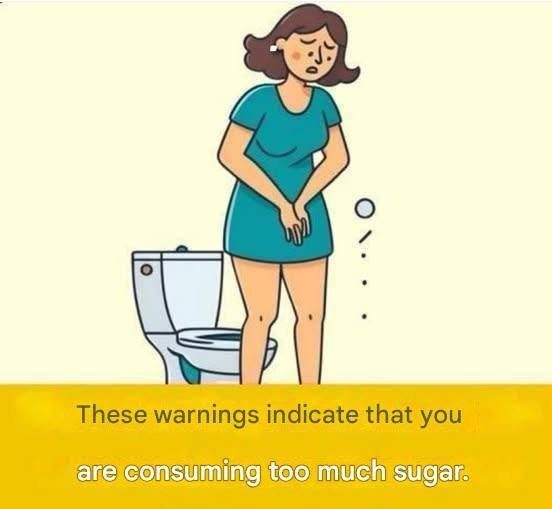
10 Warning Signs You May Be Eating Too Much Added Sugar
There isn’t a specific set of symptoms that proves you’re eating too much sugar. However, a consistently high intake of added sugars can contribute to several noticeable problems.
- Frequent energy crashes — feeling energetic after eating and then tired or sluggish later.
- Strong cravings for sweet foods — repeatedly wanting sweets or sugary drinks.
- Difficulty maintaining a healthy weight — sugary foods and drinks can add substantial calories without much fullness.
- More dental cavities — frequent exposure to sugars increases the risk of tooth decay.
- Increased thirst — persistent excessive thirst can occur with high blood glucose, although it has many possible causes.
- Feeling hungry soon after eating — especially when meals are dominated by refined carbohydrates and added sugars.
- Bloating or digestive discomfort — particularly after large amounts of sugary foods or drinks.
- Poor sleep — high-sugar eating patterns may be associated with poorer sleep, although many factors influence sleep.
- Changes in blood glucose — repeated high glucose readings are much more meaningful than symptoms alone.
- Abnormal triglycerides or cholesterol — a high intake of added sugars can contribute to unfavorable blood lipid levels in some people.
How much is too much?
The American Heart Association recommends limiting added sugars to no more than about 6 teaspoons (25 g) per day for most women and 9 teaspoons (36 g) for men. These limits refer to added sugar, not naturally occurring sugars in whole fruit or plain milk.
You don’t necessarily need to eliminate sugar completely. A good starting point is to reduce soft drinks, sweetened tea/coffee, sweets, desserts, and highly processed foods, while choosing whole foods more often.
If you’re experiencing persistent thirst, frequent urination, unexplained weight loss, or blurred vision, don’t assume it’s simply from eating too much sugar—those can be symptoms of diabetes and warrant a blood-glucose check.