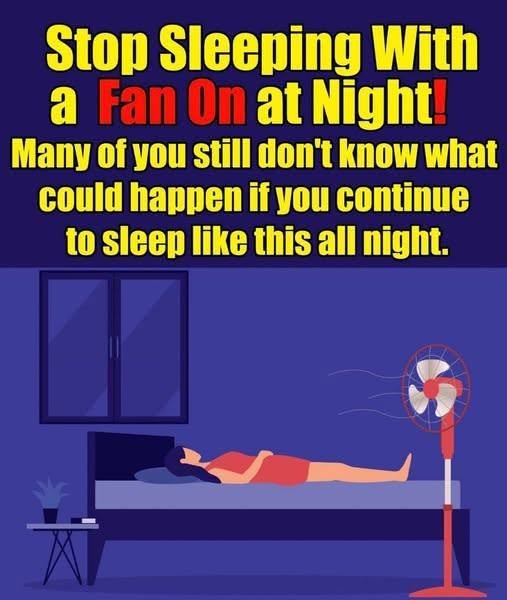
A fan doesn’t necessarily disrupt sleep—for many people, it actually helps them sleep by keeping the room cool and providing consistent background noise. But it can cause problems for some people.
How a fan might interfere with sleep
-
Too much cooling: If the room or your body becomes too cold, you may wake up or sleep less comfortably.
-
Dry air: Constant airflow can dry your eyes, nose, throat, or skin, especially in an already dry room.
-
Allergens and dust: A dusty fan can circulate dust, pollen, and other particles, potentially aggravating allergies or asthma.
-
Noise: Although fan noise can mask outside sounds, an irregular or rattling fan can cause subtle sleep disturbances.
-
Direct airflow: Having the fan blowing directly at your face all night may worsen nasal or throat irritation in some people.
If you like sleeping with a fan
You generally don’t need to stop using it. Keep the fan clean, use a comfortable rather than very cold setting, and consider pointing it away from your face or using an oscillating setting.
In hot weather, keeping the bedroom comfortably cool can actually improve sleep, so the benefits may outweigh the disadvantages for many people.