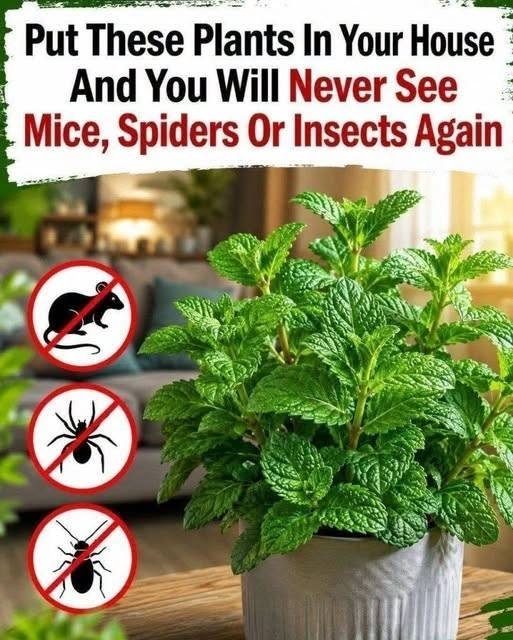
Ah, the ultimate garden-center clickbait! Every spring and autumn, social media floods with lists of magical “botanical shield” plants that supposedly turn your patio into an impenetrable fortress against mice, spiders, and every creeping thing known to science.
While certain plants do contain strong essential oils that insects or rodents find unappealing, the internet vastly exaggerates what a potted peppermint plant on your windowsill can actually achieve.
Here is the realistic breakdown of how botanical pest repellents actually work—and where the hype falls flat:
1. Peppermint (The Mouse & Spider Myth)
-
The Claim: Planting peppermint around your foundation or placing a pot by the door will banish mice and spiders for good.
-
The Reality: Mice and spiders dislike strong, pungent scents like concentrated peppermint oil because it overpowers their sensory receptors. However, a live growing plant sitting across the room—or even right by a doorway—won’t emit nearly enough vapor to stop a determined mouse looking for a warm shelter in October. You need heavily concentrated essential oil extracts to get any repellent effect, and even then, it’s a temporary deterrent, not a permanent barrier.
2. Citronella, Lemongrass, and Mosquito Plants
-
The Claim: Buy this specific “mosquito plant” (Pelargonium citrosum) and you’ll never get bitten on your deck again.
-
The Reality: Simply having these plants in your garden does almost nothing. Mosquitoes will happily buzz right past a citronella plant to bite you. The oils that actually repel bugs are locked inside the plant’s cells; you have to literally crush the leaves and rub the raw plant juices onto your skin to get any active deterrent effect (and even then, it wears off quickly).
3. Marigolds (The Garden Protector)
-
The Claim: Marigolds are the ultimate multi-purpose shield that keeps all pests out of your yard.
-
The Reality: This one has a grain of truth! Marigolds do release a pungent scent (and chemicals from their roots) that can deter certain specific garden pests like root-knot nematodes and tomato hornworms. But they won’t stop a mouse from entering your house or a spider from spinning a web in your garage.
What Actually Works vs. Plant Hype
-
What doesn’t work: Setting out a few potted herbs and expecting zero bugs or mice. Pests easily bypass mild background aromas.
-
What actually works: Physical exclusion. Sealing up cracks in your foundation, storing pantry food in airtight glass containers, fixing leaky pipes, and keeping doors tightly sealed are what genuinely keep pests out. Plants are lovely additions to a home or garden, but they aren’t going to replace a tube of caulk and basic home hygiene!
Did this article try to sell you seeds for a magical “all-in-one pest repellent plant,” or was it just suggesting cute herbs to put on your kitchen windowsill?