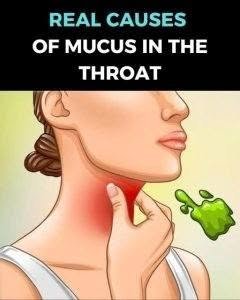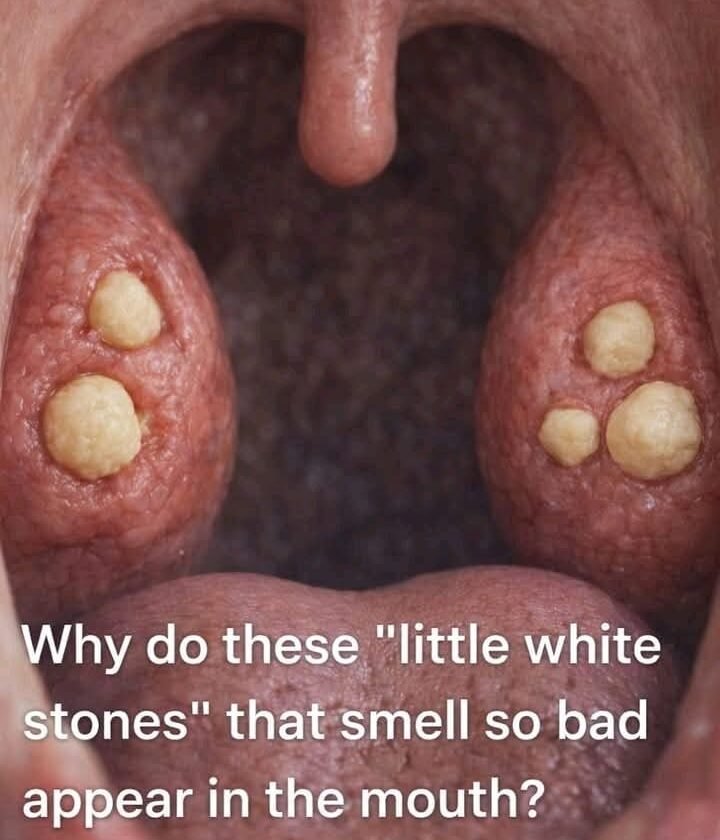
Those small white or yellowish, foul-smelling lumps are often tonsil stones (tonsilloliths). They form when mucus, food particles, bacteria, and dead cells become trapped in the small crevices of the tonsils and gradually harden.
Why do they smell so bad?
Bacteria trapped inside the tonsil material can produce sulfur-containing compounds, which have a strong unpleasant odor. Tonsil stones are therefore a common cause of bad breath.
What can you do?
- Gargle with warm salt water to help loosen material and keep the area clean.
- Brush your teeth and tongue regularly and floss daily.
- Stay adequately hydrated.
- If you frequently get tonsil stones, ask a dentist or doctor about appropriate oral/tonsil hygiene.
- Avoid aggressively digging them out with sharp objects, which can injure the tonsils and cause bleeding.
Small tonsil stones are usually harmless and sometimes come out on their own. However, recurrent large stones, persistent bad breath, significant throat pain, bleeding, difficulty swallowing, or one-sided swelling should be evaluated by a healthcare professional.
And despite what some viral posts claim, tonsil stones aren’t caused by “toxins leaving the body.” They are a local buildup of material in the tonsil crypts.